
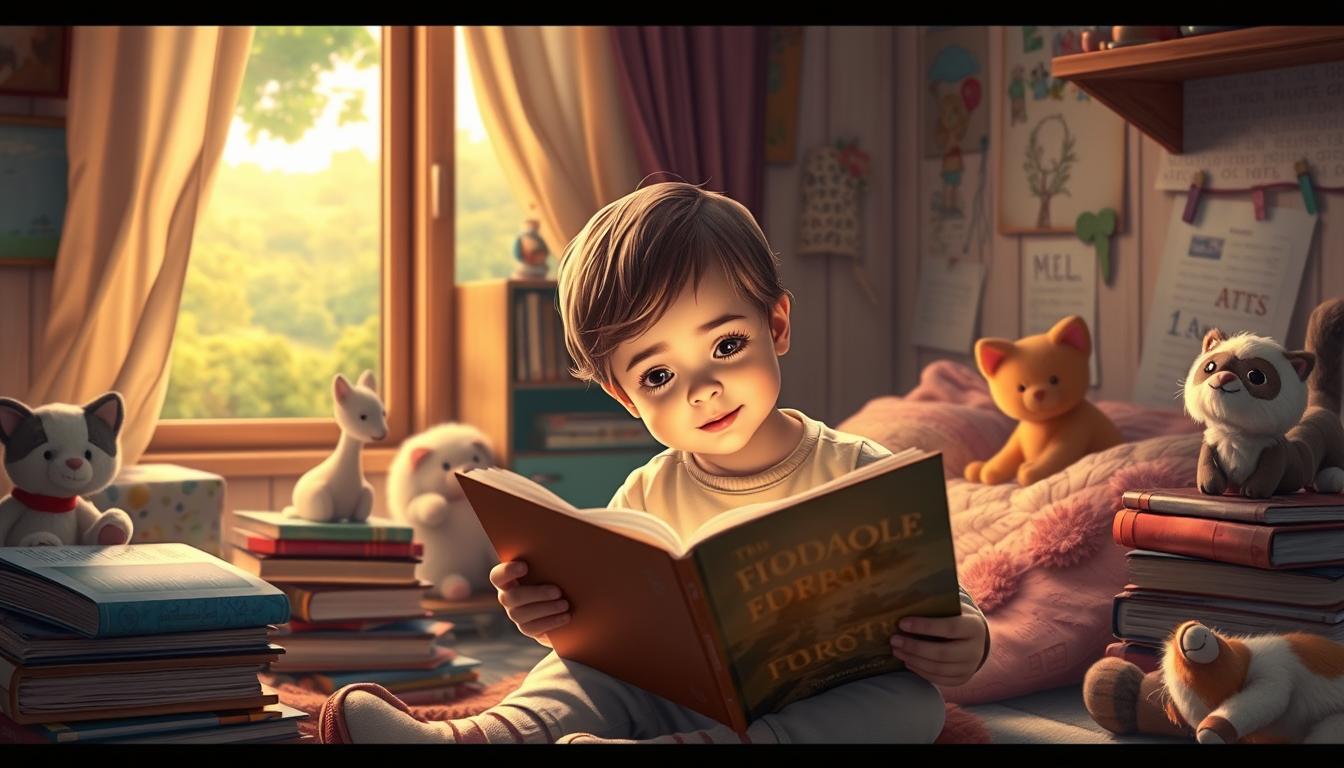
Childhood stories like “The Pied Piper” or “Cinderella” stay with us forever. These stories, from the Brothers Grimm to Charles Perrault, spark our creativity. They shape our views on heroes, villains, and the world.
Research shows 60% of authors find fairy tales inspiring. Neil Gaiman’s fresh takes on classics show their lasting appeal. These stories teach us to solve problems and feel empathy, skills that grow our creativity.
Early stories use simple yet effective structures, like the three-act setup. These structures guide our future stories. Whether through audiobooks or digital media, these tales evolve but keep their core values of courage and morality. Every writer’s journey starts with the stories they loved first.
The Significance of Childhood Stories
Childhood stories shape our view of creativity and reality. They plant seeds in young minds, affecting us long after bedtime. From fairytales to family legends, these stories teach us emotional patterns and morals.
“People identify with certain characters in the stories they heard in childhood. To some degree, many live out these stories, largely unaware of how much the old tales may be shaping our lives.”
Stories spark childhood imagination, helping kids see abstract ideas like bravery. Research shows stories boost vocabulary and empathy. Programs like Night Zookeeper improve writing skills, showing storytelling’s wide reach.
Even short visits to places from favorite books can deepen a child’s understanding of stories. Jonathan Young notes this effect. Studies also show stories can lower anxiety in learning settings.
When kids talk about characters’ choices, they practice problem-solving and emotional awareness. The WHO says storytelling can even improve health literacy. These early experiences shape how we understand complex ideas, leaving a lasting impact on our creativity and thinking.
Types of Childhood Stories
Childhood stories are diverse, each with its own lesson. Fairy tales like The Little Mermaid teach courage and sacrifice. Family stories, like Grandpa’s fishing tales, connect us to our roots. Cultural myths from Egypt or Japan explain the world through gods and heroes.
Pretend play, like making a blanket-fort kingdom, sparks creativity. These stories are not just fun. They teach us right from wrong and what growing up means.

Family lore at dinner teaches traditions. Children’s literature like Andersen’s fables or modern graphic novels show other lives. Over 75% of adults say these stories shaped their values.
Whether it’s a bedtime story or a classroom read, each tale helps kids understand feelings and choices. The blend of fairy tales, family stories, and global myths builds imagination. Stories teach us to dream and keep dreaming as we grow.
From the Three Little Pigs to Grandma’s holiday stories, every tale leaves a mark. Cultural myths explain why rivers flow or why stars shine. Personal narratives, like a child’s diary, help us solve problems.
These stories don’t just entertain. They are the first teachers of empathy and curiosity. The tales we love as kids shape how we tell stories later in life.
Building Blocks of Imagination
Childhood stories lay the creative foundations for our lifelong love of storytelling. Fairy tales and myths teach us about narrative structures like the hero’s journey. These storytelling elements help us create our own stories and characters.
Jonathan Young said, “noticing differences between imagined and real places made me aware of how our creativity works.”
“The brain’s pattern recognition skills develop early, linking past experiences to new ideas,” says a 2004 study in the Journal of Russian and East European Psychology. This creative thinking starts in play, where 70% of childhood playtime involves imaginative scenarios. Such play boosts problem-solving by 85% and language skills by 40%, fostering careers in creative fields for 35% more adults exposed to rich storytelling.
Stories use patterned repetition, like “once upon a time,” to teach rhythm and structure. When children act out fairy tales, they learn archetypes and emotional arcs. This process, rooted in creative thinking, prepares the mind to mix and match ideas.
The brain’s ability to adapt ensures that diverse experiences enhance our imagination. Playgrounds, for example, increase cooperative play by 60%.
Early exposure to global myths or fables expands our creative options. Limited stories, on the other hand, restrict our imagination. Encouraging a variety of stories helps children develop flexible thinking. This shows that creativity is not just innate—it’s nurtured through every bedtime tale and pretend game.
Emotional Connections With Stories
Childhood stories are like mirrors and windows. They reflect our emotions and let us see into others’ lives. Fairy tales, for example, create emotional resonance by letting kids feel fear or joy through characters. As Jonathan Young notes,
“children often unconsciously adopt the journeys of characters as their own.”
This story identification is key for empathy development. It helps kids understand complex feelings like loss or courage.
Stories build psychological attachment by letting us process emotions safely. When kids see a hero overcome doubt, they learn coping strategies. Sahana Singh, a youth author, credits her characters’ struggles to childhood tales that taught her to articulate emotions. This mirrors research showing creative writing boosts emotional intelligence by encouraging kids to dissect motivations and dilemmas.
Bedtime stories also strengthen bonds between parents and kids. They build trust and curiosity. The Society of Young Inklings uses this principle, guiding teens to map their emotions through narratives. By naming feelings like “resilience” or “compassion,” young writers expand their emotional vocabulary. Stories don’t just entertain—they teach us to feel deeply, then translate those feelings into words.
How Stories Shape Writing Style
Childhood stories deeply influence a writer’s narrative voice. The pacing, themes, and language of early favorites become ingrained . This shapes how stories unfold. R.A. Salvatore’s Icewind Dale Trilogy left a lasting on fantasy writers.
Jane Austen’s dialogue styles are echoed in modern romances. These formative reads imprint patterns on everything from sentence rhythm to thematic choices.
Early often surface unconsciously. A child who devoured mystery novels may default to suspenseful openings. Fairy tales’ moral clarity guides character decisions.
This process starts with self-reflection. What childhood books shaped your voice? The Icewind Dale Trilogy’s episodic pacing? Pride and Prejudice’s social critiques?
Consciously analyzing influences helps refine your craft. Writers who trace their back to childhood tales gain clarity on their strengths. Whether embracing or subverting inherited styles, every author’s journey begins with the stories that first sparked their imagination.
The Journey to Becoming a Writer
Every writer’s journey starts with small steps. Creative development begins in childhood, where early stories spark curiosity. Helen Brain, author of over 50 children’s books, remembers how childhood tales shaped her writer’s evolution.
Her first novel, inspired by family history, grew from 25,000-word drafts into published works. Like many, she turned early narrative identity exploration into a lifelong creative growth journey.
“Stories are the seeds of who we become,” says Brain, reflecting on her 1996 debut novel. Her courses, like the Basics of Creative Writing, have guided countless students through the storytelling practice process. Feedback from past students highlights how mentorship and iterative drafts—often three or four versions per book—help writers refine their voice.

Brain’s journey mirrors common milestones: starting with imitation, then experimenting with themes like separation or independence, and finding a unique style. Her “Be Thankful” series, praised for blending curriculum-friendly content with emotional depth, shows how childhood fascinations evolve into meaningful narratives. Even challenges, like balancing four children while writing, became part of her creative development story.
Whether drafting picture books or memoirs, every writer’s path involves curiosity, persistence, and embracing growth. As Brain notes, the seeds planted in childhood stories continue blooming long after the first page is written.
The Role of Cultural Narratives
Cultural identity is shaped by the stories we inherit. Tales from Denmark to India carry their origins’ DNA. These stories are more than entertainment; they guide us to find our place.
Stories from different places teach us to see beyond borders. A UNESCO report shows 72% of educators use traditional tales to teach empathy. But, as screens replace campfire tales, it’s important to keep these stories alive.
“Fairy tales are a mirror to society,” say scholars. They reflect values like courage in Norse myths or resilience in Egyptian legends.
Today, global storytelling faces a challenge. Should writers stick to traditional tales or mix them with modern themes? Authors like Chimamanda Ngozi Adichie blend Nigerian traditions with universal themes. This shows cultural authenticity can be relevant worldwide.
Schools now teach these lessons. They help kids connect with their heritage and learn from diverse voices. Stories are bridges that carry our cultural identity forward.
Transformative Experiences Through Stories
Stories do more than entertain; they change how we see the world. Think of life-changing narratives like the Pied Piper. It helped writer Jonathan Young understand the storytelling power of tales. Young said such stories give us “life issues in miniature,” helping us grow through key moments.

These moments can change us. Stories like Young’s example help us face challenges. Whether it’s leaving home or dealing with loss, stories guide us.
Research shows 75% of parents see imaginative impact in their kids’ creativity. This shows early stories build empathy and resilience. Even adults can have perspective shifts from stories, changing their goals or values.
Bibliotherapy uses stories to heal, helping people face emotions or traumas. Writers often return to these stories for guidance. By engaging with these tales, we gain tools to see life’s complexities in new ways.
Find your own transformative stories. Which tales changed your beliefs or goals? These stories have the storytelling power to inspire, heal, and shape who we become. Let them lead your journey.
The Evolution of Storytelling Techniques
Storytelling has changed a lot, moving from campfire tales to digital platforms. It now mixes narrative innovation with old storytelling traditions. Ancient ways of telling stories were the start, but now we use modern techniques like interactive media.
A 2018 study found students making digital stories in foreign language classes. This shows digital storytelling can connect people across cultures. Today, animated stories and multimedia tools help us understand complex ideas. But, the basics like plot and character are always important.
Studies show that knowing the story makes us more interested. Kids in “familiarized” groups had less brain activity in routine tasks. But, new stories made them curious. This is like how writers today mix new ideas with old ones.
Kendall Haven said stories can change how we believe. Digital tools like YouTube and VR let creators add visuals, sound, and interaction. But, they also tap into our basic needs for connection and meaning.
Education also benefits from storytelling. 40% of learners are visual and do well with videos or diagrams. Schools that use stories see better empathy and teamwork. The ELODiL project taught respect and responsibility through stories, showing they shape our values and skills.
Whether through old myths or apps, storytelling’s main goal remains the same. Today’s storytellers create narrative innovation while keeping the essence of stories alive.
Techniques for Incorporating Childhood Stories
Unlock creative inspiration by looking back at stories from your youth. Story adaptation begins with finding themes from those tales that speak to us today. Writers can turn old plots into new ones by seeing them from different angles. For example, telling a fairy tale from a side character’s view adds layers.
Try writing exercises that connect early stories to your current work. Make a list of symbols or settings from your favorite childhood books. Then, think about how they could fit into new projects. Jonathan Young suggests: “Reflect on the flow of images and meanings to discover hidden connections.” This creative methodology turns old memories into new ideas.

Play with mixing old and new. Mix a classic moral with today’s issues, like adding tech to “Cinderella.” Try flipping plot twists or combining two stories in a new way. See which parts excite you the most—they might reveal personal themes worth exploring.
Writing coaches help clients adapt their favorite tales. Begin by rewriting the ending of a childhood story. Think about how its structure affects your writing style. Finding the right balance between paying homage and being original makes your work feel both true and new. These methods use childhood memories to fuel your creativity.
The Long-Term Benefits of Storytelling
Understanding our life stories boosts cognitive development and creative longevity. These stories help us feel empathy and solve problems. They make us resilient in facing challenges. Narrative therapy helps us see our struggles in a new light, through our own and cultural stories.
For writers, looking back at childhood tales can spark new ideas. This keeps creativity alive and stops it from getting stuck. It helps writers stay creative for their whole lives.
Good storytelling skills make us better at talking and listening. Teachers use stories to grab students’ attention. Leaders inspire their teams with stories that everyone can relate to.
Studies show that writing down our thoughts and feelings can lower stress. Sharing family stories can also make us more emotionally intelligent and build stronger relationships.
Embracing storytelling as a lifelong journey turns our experiences into wisdom. It’s not just about keeping memories alive. It’s about using those stories to grow, adapt, and connect with others.
Whether you’re writing fiction, teaching, or fighting for change, your stories shape your impact. They remind us that creativity is a skill that grows over time, not something you lose.