
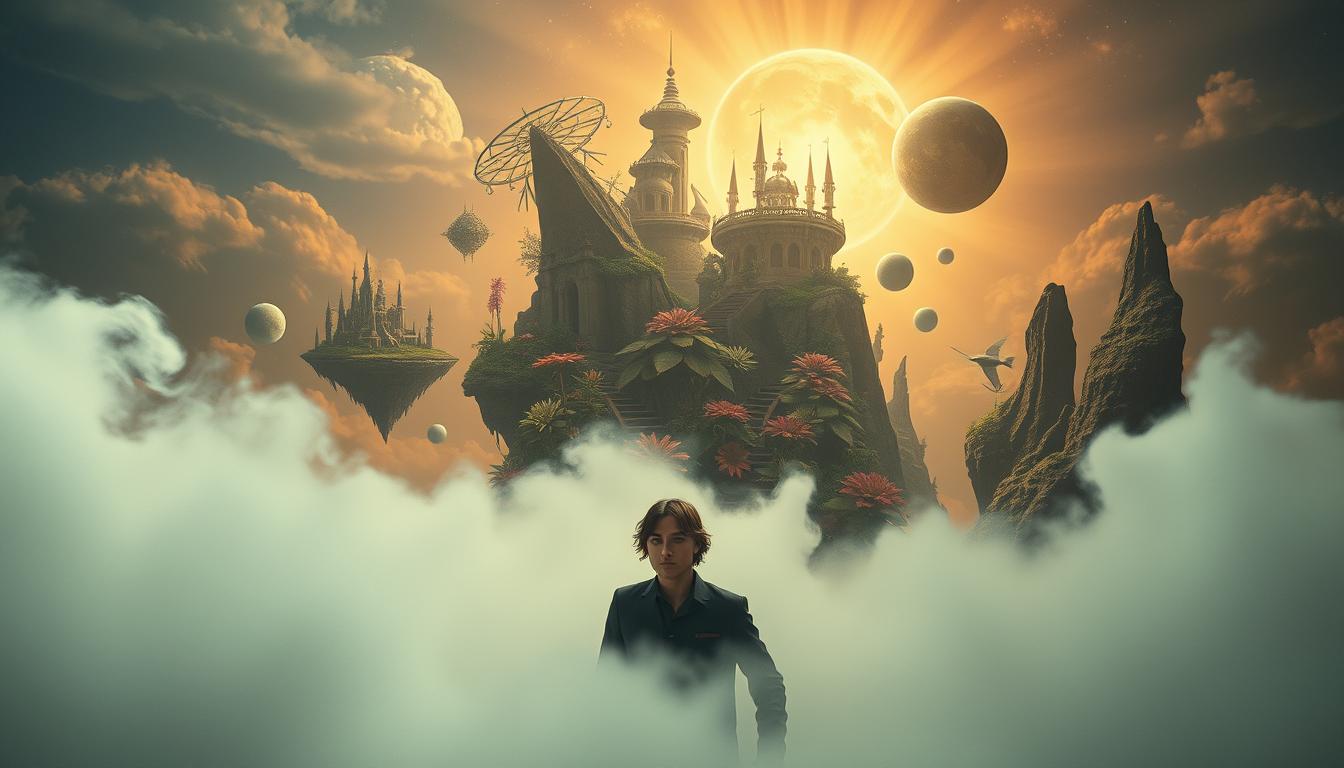
Stories from dreams have long been a secret ingredient in groundbreaking fiction. Mary Shelley’s Frankenstein and Stephen King’s Misery both sprang from real nighttime visions. They prove dream-inspired fiction can birth unforgettable tales.
These works show how sleep’s mysteries fuel creativity. They turn fleeting thoughts into timeless narratives.
From Dan Chaon’s Stay Awake, shaped by night terrors, to Colson Whitehead’s zombie epic Zone One inspired by childhood nightmares, authors turn personal dreams into art. Even H.G. Wells’ “A Dream of Armageddon” used sleep visions to explore societal fears. This shows dreams are a universal wellspring of imagination.
Every night, our minds craft stories from dreams waiting to be shared. Whether it’s a flicker of light or a haunting vision, these fragments are raw material for dream-inspired fiction. Let’s uncover how to turn your subconscious musings into tales that resonate with authenticity and surprise.
The Fascination with Dreams: An Introduction
Humans have always been fascinated by dreams. Scenes like showing up unprepared in public or losing something vital strike an emotional chord. They are perfect for dream narratives.
These shared experiences—falling, flying, or facing the unknown—create instant connections. During REM sleep, the brain’s activity spikes. This creates visuals and feelings that linger, giving rich material for fiction.
The subconscious mind is an untapped well of creativity. Studies show that emotions processed in dreams can shape mental health. This gives writers raw inspiration.
From a child’s first simple dream to an adult’s layered fantasies, this inner world holds endless ideas. Exploring these nightly stories helps creators uncover universal themes. They turn private visions into tales that resonate widely.
REM’s intense imagery and emotional depth make dreams a bridge between personal and collective experiences. By studying how dreams blend reality and fantasy, authors tap into a timeless source of imaginative power.
Real Dreams as Inspiration for Fiction
Every night, our minds create stories that are as wild as any creative writing. Dreams offer a treasure trove of writing inspiration—from unique settings to unexpected twists. Stephen King drew from childhood nightmares for his horror stories. E.B. White’s dream about a talking mouse inspired Stuart Little.

Studies show dream journal keepers are 34% more creative than others. They remember vivid scenes from REM sleep, where dreams are most intense. Keeping a journal by your bed can turn dreams into story ideas.
In the past, dreamers were highly valued. Ancient Egyptians trained dream interpreters, and Greeks believed gods spoke through dreams. Today, writers can see dreams as a source of creativity. Even one dream a year can spark a story, like Mary Shelley’s Frankenstein.
Getting better at this takes practice. Try to avoid alcohol before bed and set a goal to remember your dreams. Write down what you remember as soon as you wake up. This way, you can use the emotions and ideas from your dreams to inspire your writing.
Dream Analysis and Storytelling
Understanding dream interpretation reveals hidden layers in stories. Jane Gomez’s dream of a waterfall showed her unresolved tension. This led her to find real-life solutions. Writers can use such symbols to show characters’ inner struggles.
A rushing river might symbolize a character’s fear of change. A crumbling bridge could hint at a relationship’s end. These symbols add depth to stories.
Dreams are used worldwide to navigate life. The Amazonian Ese Eja see dreams as journeys into spirit worlds. The Ongee use shared dream details to find food.
These traditions show how symbols are universal. They offer tools for storytelling. Even Paul McCartney’s “Yesterday” came from a dream, showing dreams inspire creativity.
Neuroscience explains why dreams feel vivid yet fragmented. During REM sleep, brain areas linked to emotion and memory light up. Logical areas quiet down. This mix creates surreal scenes for stories.
Discontinuous narratives in dreams surprise readers without feeling forced. They add a unique touch to stories.
“Dreaming may represent a potent, naturally occurring form of confabulation where imaginary events are created and vividly experienced.”
Writers don’t need to analyze every dream. Focus on recurring symbols like a storm or a key. Jane’s waterfall dream showed her blocked creativity.
By linking symbols to real emotions, stories gain depth. Readers can feel the emotions without needing to be told.
Crafting Fiction from Dreams
Turning dream fragments into stories needs careful fiction writing techniques. You must balance surreal images with clear stories. A writer once took disjointed dream scenes and made a rocket launch story with a logical plot.
They picked out vivid dream elements, like a glowing launch tower. They put these into a three-act structure. This kept the story flowing while keeping the dreamlike wonder.

Begin by writing down symbols or emotions from your dreams. In “Crafting Dreams” (ISBN 978-1535264860), the author spent 18 years perfecting this creative process. They suggest finding the core emotions in dreams and building characters or settings around them.
A nightmare about falling could symbolize a character’s anxiety in a thriller. This makes the dream part of the story’s emotional core.
Use surreal dream details as plot twists or symbols. The Sopranos’ “Test Dream” episode is a great example. It showed Tony’s subconscious guilt in surreal dream sequences, hinting at future plot points.
Focus on what feels emotionally true, even if it’s not logical. This helps readers connect with the story’s heart.
Edit your work hard. Not every dream image fits. Ask if it adds to the story’s tension or theme. Mix dream-inspired creativity with traditional storytelling rules. Your readers want the familiar mixed with the strange.
Famous Stories Based on Dreams
Dreams have inspired stories for centuries, making them a key part of timeless art. Mary Shelley’s Frankenstein started in 1816 after a nightmare. Robert Louis Stevenson’s Dr. Jekyll and Mr. Hyde came to him in a dream, as he wrote, “The idea came to me with a strong shock of surprise.” These classics show how dreams can turn into masterpieces.
Today, dreams continue to inspire stories. Colson Whitehead’s Zone One came from childhood zombie dreams. Stephenie Meyer’s Twilight began with a dream of a vampire and human talking. Even famous songs like Paul McCartney’s “Yesterday” and Keith Richards’ “Satisfaction” started in dreams.
Video game creator Toby Fox turned a fever dream into Deltarune. This shows dreams can inspire more than just books. These stories teach writers to explore their own dreams.
Science also benefits from dreams. Otto Loewi won a Nobel Prize after a dream inspired him. Writers like George Saunders, who took 18 years to write Semplica Girl Diaries from a dream, show patience is key. Dreams are a treasure trove of stories that can captivate readers for ages.
Personal Dream Stories: A Treasure Trove
Every night, your mind creates stories only you can tell. A dream journal turns these moments into creative gold. Studies show writing down dreams boosts recall by 70%, making dream recording a game-changer. Tools like iPhone voice memos or apps like Plain Text simplify capturing ideas before they fade.

One writer turned a bizarre dream into a novel draft in just two weeks. Recurring dreams often hide deeper themes—like fear of failure or a longing for freedom—perfect for crafting relatable plots. These patterns form a personal lexicon of emotions and conflicts.
Recording dreams creates a feedback loop: the more you write, the richer your nightly stories become. Old entries become a vault of unused ideas, waiting to inspire new narratives. But be mindful—dreams featuring real people require sensitivity to avoid unintended harm.
Over 60% of people find childhood yearnings echo in their adult passions. Jotting down these visions turns personal history into universal stories. Your dreams aren’t just memories—they’re raw material for adventures no one else can create.
Elements of Dream-Based Fiction
Dream-based stories are all about the surreal and fragmented nature of dreams. Lucid dreaming lets characters shape their own subconscious worlds. This creates twists that challenge reality. Writers use sudden changes in setting or dialogue to capture the dream-like feel, like in Alice’s Adventures in Wonderland.
Good dream sequences mix clarity with mystery. Using present tense or italics tells readers they’re in a surreal space. Steer clear of clichés like “I woke with a start” to keep scenes interesting. Ask yourself: Does this dream reveal character secrets or hint at future events? If not, it might pull readers out of the story.
“Dreams defy logic yet retain a haunting coherence—a paradox writers must master.”
Lucid dreaming allows characters to face their fears or desires openly. In Midnight’s Edge, a hero navigates a digital nightmare, blending sci-fi with self-discovery. Stories like this use vivid details, like colors “blazing yellow,” to draw readers in without explaining too much.
Great dream fiction keeps surreal moments grounded in emotional truth. A fading memory or recurring symbol can guide readers through the chaos. When done right, these sequences add depth to themes, showing dreams are mirrors of our minds.
Overcoming Writer’s Block with Dreams
Writer’s block doesn’t have to hold you back. Dreams can be a treasure trove of writing inspiration. They unlock the mind’s hidden corners. For example, Jane found a solution to a workplace issue after dreaming of a rushing waterfall. Her dream’s imagery helped her find a way to resolve tension in her story.
Try “dream incubation” when you’re stuck. Before bed, think about your story’s problem or goal. Your subconscious will work on it while you sleep. Keep a journal by your bed to jot down any ideas that come to you in the morning. Even vague dreams can spark new ideas for your story.

During the moments between sleep and wakefulness, ideas often pop up. Use this time to write down any phrases or images that come to mind. Many authors, like Dean Koontz, have credited these moments for their success. Even small notes can help you make progress.
Perfectionism can slow you down. Dreams encourage you to be flexible. Write without judgment first, then refine later. John Grisham says consistency is more important than perfection. Try to write 200 words a day to let ideas flow naturally. Dreams show us that creativity knows no bounds.
How to Record and Use Dreams in Writing
Starting to write from dreams begins with dream recording. Keep a journal or voice memo next to your bed. Write down any images, feelings, and strange details as soon as you wake up. Even small parts can help create stories or characters.
Scientists say REM sleep, when dreams are most vivid, happens later at night. So, setting an alarm an hour before you wake can help you remember more.
Use tools like sketching or voice notes to catch quick ideas. Sarah Lee, author of the #1 Amazon Bestseller *The Dream Haunters*, says to write down everything, even if it seems random. “My first novel started with a dream about shadow figures and turned into a supernatural thriller,” she says.
The podcast *Women’s Dream Enlightenment*, ranked in the Top 20 spiritual podcasts, talks about how keeping a dream journal boosts creativity.
To turn dreams into stories, make the strange parts even stranger. Christopher Nolan’s *Inception* was inspired by his own dreams. Famous writers like Edgar Allan Poe used nightmares in their stories.
When you’re stuck, look back at your journals for recurring symbols. A dream about a foggy hallway could become a haunted mansion in your story. Keep track of your progress with a checklist: sleep cycle awareness, daily writing, and linking small details to your story.
Writing from dreams gets easier with practice. Many people start remembering 3-5 dreams a week after a few weeks. Use these to add depth to your scenes or dialogue. Remember, even the smallest details can be key. As Lee says, “A single dream detail can unlock months of writer’s block.”
The Future of Dream-Inspired Fiction
Emerging technologies like AI and EEG devices are changing how writers work. Tools that read brainwaves or turn dreams into text could make writing faster. Imagine AI turning brief visions into full dream stories, or VR making stories feel as real as a nightmare.
These new tools build on a long tradition. Authors like Mary Shelley and Stephen King used their dreams to create classics like Frankenstein and Misery.
Today, 65% of sci-fi fans enjoy stories with dream sequences. Technologies like those in Inception might soon become real, mixing science with storytelling. Writers already use dreams to make characters more real—78% say it adds emotional depth.
But there are questions about ethics. Who owns recorded dreams? Should tech protect privacy or creativity?
Despite these issues, the desire to share dream stories won’t disappear. Dreams have inspired hits like The Terminator and Twilight. As AI and neuroscience improve, we’ll see more interactive stories and adaptations.
Yet, the essence of dream stories remains the same. They tap into our curiosity about the mind’s secrets. The future of storytelling will blend new tech with timeless imagination, keeping dreams at the heart of creativity.