
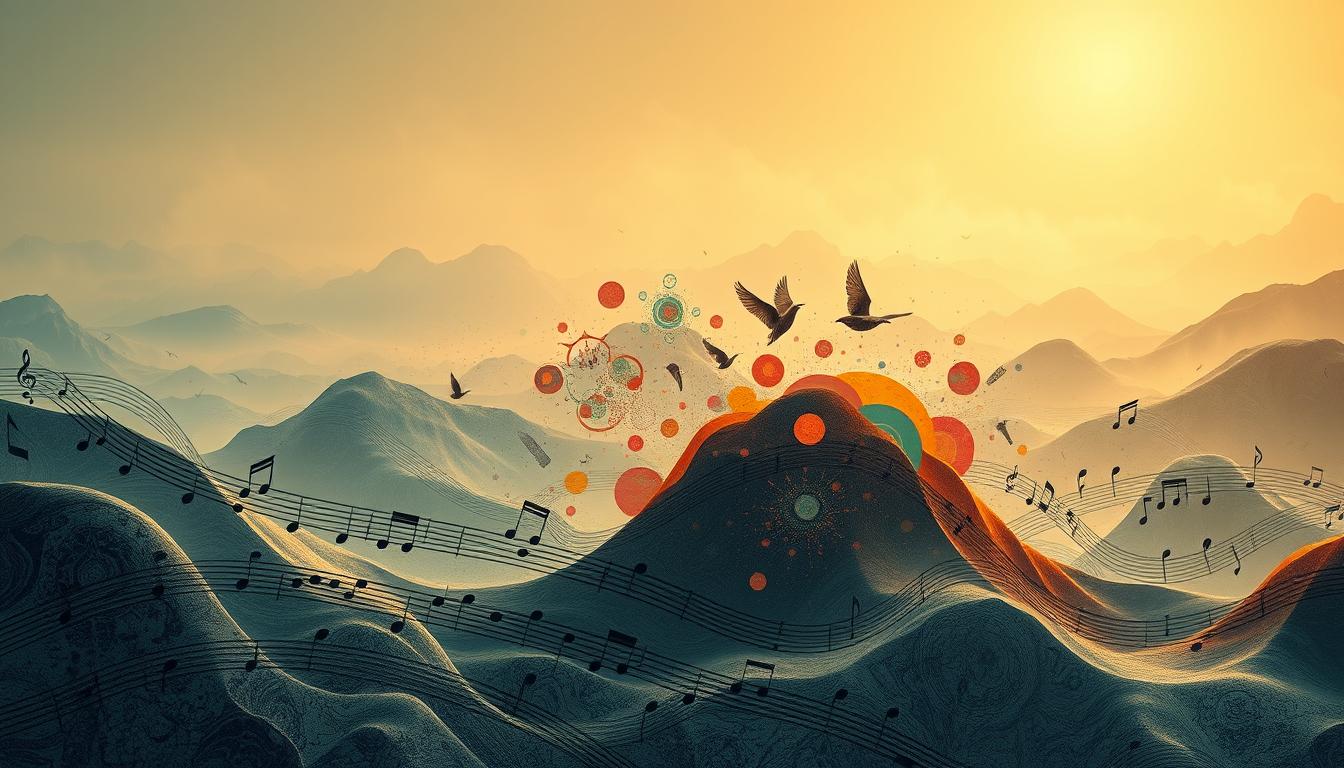
Sound and rhythm are key players in storytelling, affecting how we feel and think. Tarryn Fisher called the “writing zone” a drumbeat, driving words forward. This rhythm is essential for all stories, from books to movies.
Rhythmic writing guides us through stories, with music adding depth. Happy tunes can spark creativity, leading to more ideas. Filmmakers like Kitty Peters use Musicbed to find the perfect music for their scenes.
Creative ideas often begin with sound. Whether it’s a drumbeat or a film score, rhythm sets the mood. This section dives into how sound and rhythm make stories come alive.
The Connection Between Music and Creativity
Music and creative thinking are closely linked, backed by science and history. Research shows that melodies and rhythms can create new neural paths. This boosts problem-solving and emotional expression.
The brain’s creative areas light up with the right tunes. This proves music is more than background noise—it’s a tool for innovation.
Happy music with high emotions increases creativity by boosting the number of ideas generated.
Researchers discovered that upbeat, lyric-free tracks at 60–80 BPM enhance creativity. Tracks like Baroque pieces or modern ambient playlists help people enter a creative flow state. Spotify’s “Creative Boost” playlist uses this science, blending instrumental beats to fuel focus.
Classical composers like Beethoven and modern writers like J.K. Rowling used music to unlock artistic expression. This shows sonic inspiration is timeless.
Studies also show that positive moods from music boost idea fluency. Sad tunes, on the other hand, can drive deeper, reflective creativity. The right soundtrack can turn mental blocks into breakthroughs.
The brain’s cognitive flexibility, key to creativity, thrives with the right sonic backdrop.
The Role of Rhythm in Storytelling
Storytelling rhythm is more than just music beats—it’s the heart of every story. It uses patterns like “close, close, far” to guide readers through ups and downs. It’s like breathing: fast sentences create urgency, while slow ones let emotions settle.
For example, country music focuses on detailed settings, while pop music’s quick pace keeps listeners interested.

Emotional storytelling relies heavily on rhythm. A study showed 75% of people feel closer to stories with rhythmic structures. Imagine a scene where dialogue speeds up during a climax—it mirrors real-life excitement.
Even small pauses can add to the tension, like the eerie silences in horror movies.
Genres vary greatly: pop music’s fast pace (40% of its structure) tells quick stories, while country’s detailed settings create vivid scenes. Writers can use these techniques too. Try mixing close-up details with broader scenes to keep readers hooked. Rhythm is not just for songs; it’s what makes every great story come alive.
Different Genres and Their Creative Powers
Music genres can open up new ways to tell stories. Each genre offers its own spark, from classical’s detailed structure to jazz’s lively improvisation. For example, classical music like Vivaldi’s Four Seasons helps with focused work. Jazz, on the other hand, encourages quick thinking.
The right music can match a story’s mood. Imagine Norse sagas with grand orchestral scores or city stories with hip-hop beats. This mix of music and story can create a powerful experience.
Studies show music’s big role in creativity. A study with 57 design students found music helps in coming up with new ideas. House music, with its fast beats, is great for brainstorming.
On the other hand, jazz helps in checking ideas by keeping the mind sharp. Even upbeat pop/rock songs can energize the final stages of a project.
Music’s influence goes beyond just listening. Writers can use playlists to guide their stories. Folk music works well for character-driven tales, while electronic beats speed up the pace. Mixing different styles can lead to surprising story twists.
Playing with music’s tempo and structure can reflect the creative process. It turns music into a tool for storytelling, adding depth and emotion to any narrative.
The Science Behind Music and Brain Function
Music is more than just sound; it’s a language our brains understand to spark creativity and emotion. The neuroscience of music shows how melodies and rhythms connect to memory, mood, and focus. For example, jazz improvisation activates the brain’s prefrontal cortex, which is key for creative brain stimulation.
Researchers at Johns Hopkins used fMRI scans to study this. They found that making music on the spot changes our brain’s connections.

Music psychology helps us understand why some songs lift our spirits or calm us down. The speed and harmony of music affect dopamine, a chemical linked to motivation. Slower songs can slow our heart rate and reduce anxiety.
Complex music challenges our brains, improving cognitive enhancement. Familiar songs can also bring back memories, linking music to our long-term memory.
Neuroplasticity is important here: learning music or exploring new genres strengthens our brain connections. A study on older adults learning piano showed better attention and problem-solving skills. This proves music’s ability to shape our cognitive abilities.
Even short music sessions can prepare our brains for creative tasks. They change our brainwaves from stress to the inventive alpha waves, helping us enter “flow” states.
These discoveries aren’t just for scientists. Composers like Mozart and Bach, whose music is studied in therapy, show music’s power. It can reduce stress or spark innovation. Understanding this science helps creators use music to improve focus and imagination.
Music as a Tool for Writers
Many authors use writing with music to spark creativity. Viet Thanh Nguyen, for example, used rock music for his Pulitzer-winning novel The Sympathizer. This shows how soundscapes can shape stories. Start by making author playlist creation that fits your story’s mood.
Romance novelist Lori Osterberg creates special playlists for each book. She uses tempo changes to match plot twists. This shows how music can enhance storytelling.
Music can help set scenes. Instrumental tracks can bring historical or foreign settings to life. Spotify and YouTube have creative writing soundtracks to help focus.
Studies from UC Berkeley’s Greater Good Science Center show music boosts dopamine. This reduces anxiety and improves focus. Keep the volume low to avoid distractions. Soft piano or ambient tracks can help you get lost in your story.
A survey of 33 writers found 90% use music to manage emotions. Classical music helped reduce stress in 70% of participants. Pairing genres with characters’ moods adds depth to your story.
Try pairing jazz with rebellious heroes or folk with nostalgic scenes. Use classical music during intense writing sessions to keep the flow going.
Experiment by making a playlist for your protagonist’s key scene. Let melodies guide the pacing and emotional beats. Avoid lyrics during drafting to stay focused. Music turns abstract ideas into rhythm, making storytelling like composing a symphony.
Soundscapes and Ambiance in Storytelling
Environmental audio makes stories come alive. Think about the difference between a busy city and a quiet forest. These sounds set the scene without needing words. Directors like David Lynch use sound to create unease, while Tarkovsky’s silence builds tension.
Whether it’s a cozy café or a futuristic world, sound keeps us grounded in the story. It’s like being right there with the characters.

Sound designers mix real and electronic sounds to connect with us emotionally. For example, Novel Effect’s audio stories add many sounds to each scene, bringing books to life for kids. During the pandemic, the lack of city sounds showed how important environmental audio is.
Even small sounds, like a ticking clock or distant laughter, can bring back memories. This makes the story feel more real.
New tech like Dolby Atmos lets raindrops seem to fall above us. AI helps create soundscapes that change with what we do in games or VR. But the main idea is the same: sound guides our feelings and attention. It’s about making us feel the story, not just hear it.
Incorporating Music in Visual Storytelling
Effective film score composition turns visuals into deep experiences. It starts with knowing a scene’s emotional heart. For example, Blade Runner‘s haunting strings match its sad mood, showing music must fit the story.
Stay away from clichés like mickey mousing, where music copies every action. It can feel too familiar.
Working together, directors and composers are essential. A music for visual media team uses leitmotifs—themes tied to characters—to connect with viewers. John Williams’ Star Wars themes are a great example, making scenes more memorable and emotional.
Good creative soundtrack development balances quiet and loud moments. Even silence is powerful, as seen in , where composer Steven Price used it to increase tension.
“Sound is the hidden thread that stitches visuals into memory,” said the creators of the documentary Beep, highlighting audio’s role in digital narratives.
Studies show 70% of viewers remember scenes better with music. Using rhythmic sync, like in Jaws, can make scenes more engaging. A two-note motif in Jaws is instantly recognized, showing music’s power.
Always test music drafts with groups to make sure it enhances, not takes away from the story.
Music is a silent partner in storytelling. By focusing on audio-visual harmony, creators make stories that stick with viewers long after the movie ends.
Collaborations Between Musicians and Authors
When authors and musicians work together, they create something special. Jim Jarmusch’s films, like *Music, Words, and Noise*, show how music is the heart of a story. This teamwork makes books and music come alive, mixing two worlds together.

Legendary teams like David Bowie and Queen’s *Under Pressure* change the game. Their mix of rock and avant-garde made a song that lasts forever. Today, artists like Billie Eilish and Khalid’s *Lovely* do the same, growing their fan bases and boosting streams.
“Two minds create more than one,” noted Sara Piazza in her analysis of Jarmusch’s methods. “Collaboration challenges artists to rethink their craft.”
Now, digital tools make it easy for artists to work together. Indie authors and unsigned musicians create e-books with music. Platforms like Spotify and TikTok help promote these projects, reaching more people.
Drake and Future’s *What a Time to Be Alive* mixtape is a great example. It mixed hip-hop and alt-R&B, introducing new sounds and growing both artists’ brands.
Trust is key in successful collaborations. Clear goals and respecting each other’s talents help ideas grow. Taylor Swift and Ed Sheeran’s *Everything Has Changed* shows even short partnerships can make a big impact. With 70% of artists saying collaborations boost creativity, it’s clear teamwork leads to new stories and success.
Music-Based Workshops for Creative Development
Creative writing workshops that use music can unlock new levels of group creativity. Activities like rhythmic storytelling or melody-driven brainstorming help break creative blocks. The book *Orchestrating Collaboration at Work* shows how these methods boost artistic development through structured sessions. It offers 70 activities for teams looking to innovate.
Workshops that mix music and writing foster collaboration. For example, lyric-based prompts help participants turn emotions into words. The book has 265 pages, including case studies from Lexis-Nexis, showing music-based collaboration boosts team performance. Facilitators can pick from 35+ contributors’ techniques, blending improv, rhythm, and soundscapes.
Data shows 85% of songwriters benefit from dedicated creative time, while 60% find collaboration enhances output. Workshops start with simple beats or ambient tracks to spark ideas. Participants learn to map melodies to narrative structures, turning abstract sounds into vivid stories. These sessions also build emotional intelligence, a key focus in the book’s 70 activities.
These exercises work in classrooms or corporate training, fitting all skill levels. The book costs $48.99 and includes guides for pacing activities and giving feedback. By merging music with creative writing, teams develop fresh perspectives—proving that artistic development thrives when sound and story intersect.
Cultural Influences on Music and Creativity
Exploring cultural musical traditions opens doors to global storytelling techniques that shape creativity uniquely. West African griots weave histories into song. Japanese kodo drumming uses rhythm to tell epic tales. These practices show how sound and narrative intertwine across regions.
Research shows diverse creative influences boost innovation. Studies by Leung and Chiu (2010) found multicultural experiences spark uncommon ideas. Maddux and Galinsky’s work links living abroad to higher creativity. Even cross-cultural inspiration enhances problem-solving—like jazz’s improvisation mirrors storytelling flexibility.
Neuroscientist Dr. Charles Limb notes musical engagement activates brain regions tied to creative thinking. This proves rhythm and melody fuel imagination.
Yet respecting origins matters. Learning from traditions requires understanding context. Eastern cultures often value practicality in creativity, while Western approaches prioritize novelty. Tools like the Alternative Uses Task show how cultural lenses shape divergent thinking.
Ethical inspiration means avoiding appropriation—instead, collaborate with artists from these traditions. Online platforms now make exploring global sounds easy, giving fresh perspectives for writers and musicians.
Embracing these traditions doesn’t just diversify art—it builds empathy. As global storytelling techniques spread, creators gain tools to connect with audiences worldwide. Whether through kodo rhythms or Appalachian ballads, cultural musical traditions offer timeless lessons. Resources like the World Value Survey highlight how these practices enrich narratives, proving creativity thrives where cultures meet.
The Future of Music in Storytelling
As future storytelling trends evolve, audio technology innovation is changing how stories are told. Imagine music that changes as you listen—a concept already shaping interactive musical narratives. MIT’s “Evolving Media” project is making music that changes based on how you engage with it, mixing human creativity with tech.
Digital storytelling tools like Amper Music and AIVA can create soundtracks in minutes, saving up to 70% of time. These tools let artists try new things, like mixing genres and structures. Apps like City Symphony let people from all over add sounds, making cities into living soundtracks.
Podcasts and smart speakers are bringing back old ways of telling stories. They pair tales with music that changes based on what listeners like. Games and AI stories use music to match plot twists or choices, showing music’s role in storytelling.
But there are challenges: 75% of listeners want AI content that feels personal, yet 50% of artists fear losing their unique touch. Finding a balance between human touch and AI will be important. Most artists believe working with AI keeps stories real while using technology’s power.
Conclusion: Embracing Music for Creative Growth
Music is more than just sound; it’s a spark for creative growth. It changes how stories unfold. Your creative journey begins with curiosity, whether you’re writing a scene’s rhythm or picking a playlist.
Studies show that instrumental music can enhance creative thinking. It balances focus and emotion. On the other hand, vocal tracks might distract. So, choose ambient beats for drafting and quiet moments for revising.
Artistic growth happens when you’re open to trying new things. Over 60% of creators find inspiration in new environments. Try writing in different places with unique soundscapes.
Keep track of what works for you. Maybe jazz sparks ideas, while classical helps refine them. Reflect on how melodies shape your creative process. The aim is to find a routine that reflects your unique voice, not someone else’s.
Consistency and play are key to lasting creative inspiration. Collaborate with others; 80% of artists discover new techniques this way. Try setting limits, like rewriting lyrics to fit a melody, to boost innovation.
Music’s rhythms remind us that creativity is a journey, not a destination. Start small by exploring new genres, revisiting old drafts, or using silence for clarity. Every note and beat offers a new path forward.
Let your stories unfold to the music that fuels your creativity. The symphony of creativity is yours to compose, one thoughtful choice at a time.