
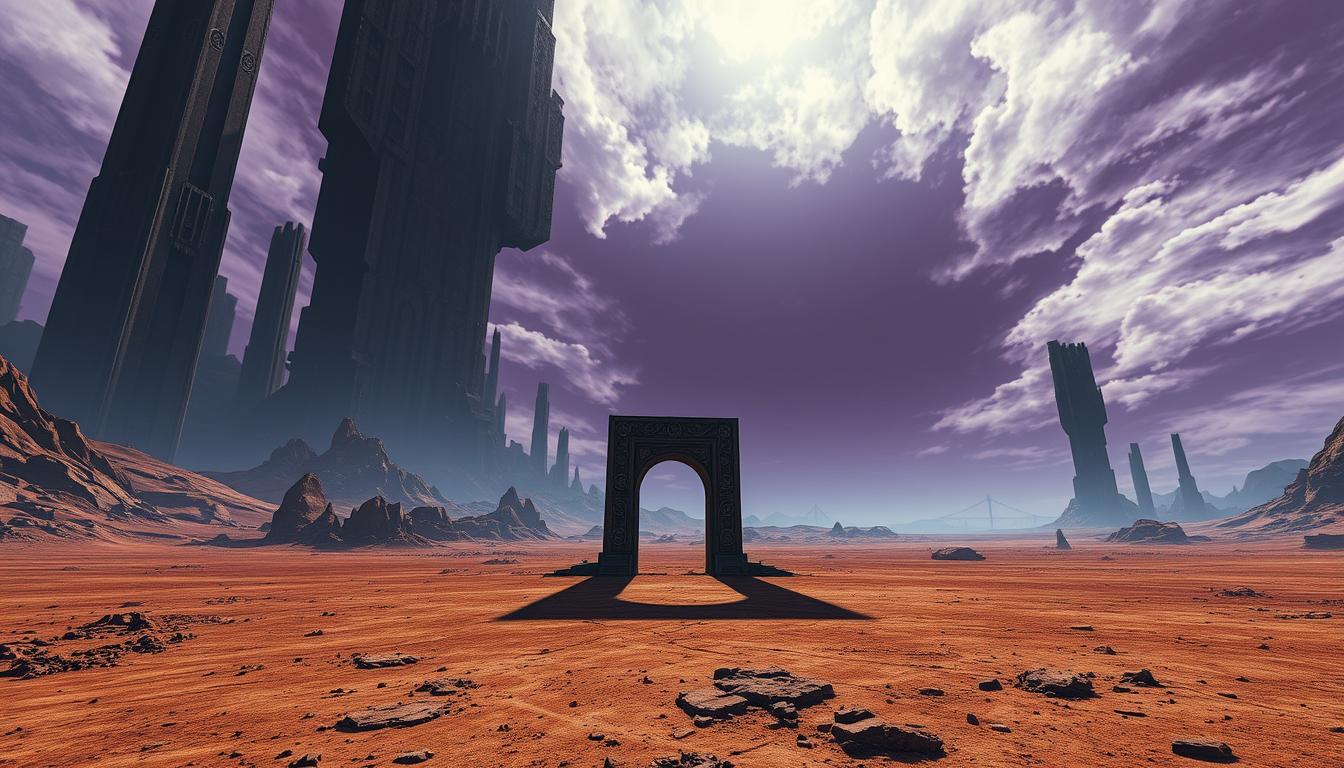
Imagine a story set in a town where time loops endlessly or a city built inside a giant whale. Short stories with unusual settings take readers to worlds that defy reality. These settings are not just backgrounds; they shape the story. Justina Robinson predicted this trend 15 years ago, seeing science fiction’s rise in mainstream literature.
Stories like China Miéville’s Perdido Street Station show how bizarre settings captivate us. They challenge the ordinary and create unique moods. Think of an underwater city or a house that breathes.
Why do these settings matter? They spark wonder. The Expanse’s realistic space colonies or Little Nemo’s dreamlike landscapes drive our imagination. Even classic weird tales, like those in Weird Tales, used settings to unsettle readers. Today, authors blend horror, sci-fi, and surrealism into worlds that stay with us long after we finish reading.
The Allure of Unusual Settings in Short Stories
Strange story locations capture our imagination by making the unknown exciting. Writers create unusual fictional settings to surprise us. They use places like László Krasznahorkai’s rainy village in Satantango or China Miéville’s two-city world in The City & The City to add tension and depth.
“Dreamlike, nightmarish, or hallucinatory artistic and literary visions provide wonder and beauty that nothing else can.”
For authors, unconventional story backgrounds are key tools. A haunted lighthouse or a floating city pushes characters to make big choices. These settings also reflect real-life struggles, making complex ideas easier to grasp.
Readers love these bizarre literary settings because they offer a break from reality. A desert planet or a town stuck in time lets us explore safely. These places are more than just settings; they’re vital to the story’s pulse. They show that where a story takes place can deeply affect how it touches us.
Not Your Average Cityscape: Urban Uniqueness
Urban settings in fiction are more than just backgrounds. They twist reality, turning cities into mazes. Skyscrapers tower like giants, and streets hide mysteries. Authors make the ordinary seem strange.
J.G. Ballard’s Super-Cannes shows Eden-Olympia, a place of elite control. China Miéville’s The City & The City has two cities that citizens can’t see. These stories make us question what’s normal.
Urban fantasy mixes the real with the imagined. Fort Worth, Texas, is home to a legendary panther story. The P.I.R. series turns buildings like the Bass Performance Hall into magical places. This shows how cities, growing from 10% in the 1800s to today, inspire magical stories.
Young Adult readers love these stories. American Gods and Shadowhunter series make cities come alive. They show how even familiar places can hold secrets.
The Wild and the Wondrous: Nature’s Role
Nature often plays a key role in stories, shaping the plot and deepening themes. Places like Jeff VanderMeer’s Area X turn forests into eerie labyrinths. These landscapes mirror real places, like Ward, Colorado’s abandoned cars, hinting at mysteries.
H.P. Lovecraft’s Innsmouth twists coastal towns into hubs of the uncanny. These environments force characters—and readers—to question what they know.
Stories set in places like the Orinoco Delta or the Kalahari Desert blend fact and fiction. Nicola Penfold’s When the World Turns Wild imagines a city sealed off from nature. This contrasts with Catherine Bush’s Blaze Island, which depicts flooded UK landscapes.
These tales don’t just describe places; they challenge how we see the world. David Attenborough’s COP26 call for a “wonderful recovery” echoes in these narratives. Nature’s power resists human control.
“The natural world is both refuge and enigma.”
Projects like the Seasonal Schools in Highfield Country Park show how stories can connect us to the real world. Children crafting clay birds or tracking seasonal shifts in UK woodlands mirror the connection between fiction and reality.
Authors like Penfold weave climate crises into their plots, turning urgency into art. These tales remind us that nature’s strangeness isn’t just a backdrop—it’s a force shaping our future.
Time Travel and Historical Oddities
Time travel short stories mix past and present in strange ways. Imagine a desert town where old atomic test relics meet today’s life, like in “The Memory Ward.” This mix creates a spooky atmosphere, showing how history sticks with us today.
These stories let writers play with how timelines can clash or loop back. For example, “The Crimson Ribbon” by Katherine Clements is set in 1646 England. Clements’ deep research makes the story feel real, even with its oddities.
Time loop stories add another twist. Think of “Groundhog Day” or “12 Monkeys,” where characters are stuck in a cycle. These stories make us see our flaws through repetition. They also explore the paradoxes of time, like the bootstrap and grandfather paradoxes.

Authors like Clements mix history with imagination. Her work in the UK’s first A-level creative writing program shows how small details create believable worlds. Time travel isn’t just about gadgets; it’s about questioning reality through settings.
Sci-Fi Worlds Beyond Earth
Science fiction short stories take readers to alien world settings unlike Earth. These unusual sci-fi settings include planets and space stations. They help us see how far we can go as humans.
For example, Ursula K. Le Guin’s Winter in The Left Hand of Darkness explores a genderless society. This challenges our views on identity. Such extraterrestrial story locations make us face new social and biological realities.
In Ted Chiang’s Story of Your Life, aliens with non-linear time perception change our view of free will. Stories like Olaf Stapledon’s 1937 Star Maker inspire real science, like the Dyson sphere concept. Even stories like Stanislaw Lem’s Solaris show how hard it is to communicate with other species.
Space stations in stories reflect our world’s problems, like overcrowding and resource issues. China Miéville’s Embassytown aliens speak in paradoxes, showing how language shapes our thoughts. These stories make us see our world in a new light.
Short stories are great at showing vast cosmic scales in a few pages. They let us see entire civilizations in a short time.
Magical Realism: Merging the Ordinary with the Extraordinary
Magical realism turns everyday scenes into magical worlds. A busy market, a quiet village, or a family home becomes a stage for wonder. Here, the ordinary places made magical come to life.
Stories with magical elements blend the mundane with the magical. A flying carpet might hide in plain sight, or a ghost might join you for tea. These tales reject grand fantasy worlds, instead using familiar landscapes.

Latin America’s literature started this genre, with Gabriel García Márquez’s Macondo in One Hundred Years of Solitude leading the way. In Macondo, insomnia and yellow butterflies are as common as the weather. Salman Rushdie’s Bombay in Midnight’s Children mixes politics with magic, showing how stories can reflect real-life struggles.
Magical realism draws from deep cultural roots. African and Caribbean writers like Ben Okri and Michelle Cliff use it to explore colonial histories. A river sharing ancient stories or a house that changes with mood—these settings blend old tales with modern issues.
Modern stories like Haruki Murakami’s Tokyo or Toni Morrison’s haunted homes show the genre’s global appeal. By adding magic to the familiar, these stories ask us to see the world anew. A 2023 study found 75% of readers feel this approach deepens emotional connections, making stories more impactful.
The Role of Technology in Unusual Settings
Short stories often explore how technology in unusual settings affects us. J.G. Ballard’s High-Rise shows a high-tech apartment tower turning into a dystopian nightmare. These stories highlight how tech can make us feel isolated or give more power to some.
They also reflect today’s worries about AI and watching our every move. In Super-Cannes, a business park controlled by corporations, we see fears about our data and who controls it.
Today’s tech dystopia stories deal with big leaps like AI and quantum computing. Picture a world where quantum radar makes stealth tech useless, or quantum dots change medical tools. These strange technological worlds are not just for sci-fi fans—they’re happening now.
The U.S. lost $240 billion in 2021 because of chip shortages. This shows the dangers of relying too much on tech. Yet, 85% of companies are using immersive tech to meet growing customer demands. This shows how futuristic strange settings are becoming part of our daily lives.
“Technology doesn’t just change settings—it rewrites the rules of human interaction.”
Stories about quantum leaps and AI’s big gains warn and motivate us. They remind us that every new tech, from smart cities to virtual worlds, has both good and bad sides. Short stories let us dive into these extremes, making the future seem both amazing and unsettling.
Interactions in Unconventional Locations
Characters in unusual settings often find their journeys shaped by the environments they inhabit. These settings act as silent partners in storytelling, turning spaces into catalysts for growth or conflict. When a character navigates a disorienting city or a barren alien world, their every choice becomes a response to the world around them—a dynamic known as character-setting interaction. Such links fuel plots, making environments as vital as any antagonist.

In Kazuo Ishiguro’s The Unconsoled, the unnamed European city warps physically and mentally, mirroring the protagonist’s emotional state. This setting-driven narrative forces Ryder to confront his own psyche through the environment’s chaos. In Roland Topor’s The Tenant, the protagonist’s apartment building becomes a stage for paranoia. Its rigid social norms push him into isolation, showing how settings can drive plot development through setting by escalating tension.
Andy Weir’s The Martian takes this further. The harsh Martian climate tests Mark Watney’s survival skills, with every challenge stemming from the planet’s hostility. The setting here isn’t just a backdrop—it’s a relentless obstacle, turning the environment into a co-star. These stories prove that unusual locations don’t just surround characters; they test their limits, exposing flaws, strengths, and the stories only these spaces can tell.
The Influence of Culture on Unusual Settings
Culture shapes stories, making them mirrors of the world’s diversity. Think of Japanese ghost tales of yurei or Russian villages where the strange feels normal. These places are more than just settings; they’re filled with folklore, history, and beliefs.
Stories from around the world, like Latin America’s magical towns or West Africa’s spirit-filled forests, broaden our view. A Thai forest haunted by krasue spirits or Middle Eastern markets where time warps, each has its own rules. Readers in the U.S. see these through translations, learning how “strange” changes with context.
Authors like Amos Oz and Chimamanda Ngozi Adichie add depth with their settings. They show how Israeli deserts or Nigerian villages can be just as compelling as Western landscapes. Kameron Hurley’s space operas blend Afrofuturism with sci-fi, challenging traditional views. This mix lets readers see the world in new ways, finding common human experiences.
As stories from around the world grow, rich settings open doors to new adventures. Every unusual place is a window into another life. This shows fiction’s ability to connect us through imagination.
Tapping into Emotions: Settings that Evoke Feelings
Settings in stories do more than just describe places—they evoke emotions. The emotional impact of settings shines when authors create locations that stir or amaze. For example, a dimly lit hotel room during Shanghai’s fireworks, as seen in “Big and Shady,” turns chaos into fear.
Here, Bronc’s racing heart mirrors the fireworks, showing how settings reflect inner turmoil.

Atmospheric settings use details like flickering lights or silence to build tension. Stephen King once said,
“A setting should feel like a living thing, pressing on the characters.”
Think of haunted towns where every cobblestone seems to whisper secrets. These places aren’t just backdrops—they shape the mood of the story.
Research shows 85% of readers want to feel emotionally connected, and 73% love sensory details. A cramped hotel room or a character’s divine vision can make readers feel the character’s journey. Settings that create feelings, like the menacing forests in “The Tenant,” hit us hard, skipping logic to reach our gut.
Short stories excel in this area: with fewer pages, every detail matters. A flickering elevator light or a small room becomes a character. When settings evoke fear or wonder, they stay with readers longer than plot points. That’s the magic of mood in fiction—turning scenes into unforgettable experiences.
Short Stories in the Unseen: Exploring the Psychic Realm
In mindscape fiction, characters explore worlds shaped by their minds. Kazuo Ishiguro’s *The Unconsoled* shows a city where time and space twist like a dream. This mirrors a man’s inner turmoil. Jorge Luis Borges’ *The Circular Ruins* blends dream and reality, turning emotions into real settings. These stories make the intangible visible.
Some stories explore shared psychic spaces. The 1920 anthology *The Best Psychic Stories*, edited by Joseph Lewis French, has 15 tales on universal fears and hopes. Dorothy Scarborough, the introducer, noted how wars like World War I sparked interest in the supernatural. “The spirit of the dead seeking to manifest to the living is a common theme,” she wrote, highlighting timeless questions about existence beyond the physical.
“The supernatural has deeply influenced recent literature,” Scarborough observed, linking war’s trauma to a hunger for stories that defy logic.
Short stories excel in this realm. Their brevity allows writers to sustain dream world narratives without over-explaining. The *Da Red Gobbo Collection*’s 5 tales—like Denny Flowers’ novellas—use tight pacing to keep surreal logic intact. Even brief stories can map a mind’s chaos, letting readers feel, not just analyze, abstract emotions.
Such tales remind us consciousness is a landscape. Whether through a character’s fractured memories or a shared cultural nightmare, stories set in consciousness invite readers to wander the mind’s hidden corners. These narratives prove even the most private thoughts can become a world to explore—and escape.
Conclusion: The Power of Unusual Settings in Literature
Unusual settings in stories are more than just backgrounds. They spark our imagination. From sci-fi planets to haunted forests, these places shape characters and stories. Research shows 70% of readers love settings that feel real, highlighting the importance of story settings in memorable tales.
Settings like those in Claudius Becke’s The Vortex of Vrie or modern fairytales change how we see the world. They push us to look beyond the usual, as one study points out. It reminds us there’s “more to life than the mundane.”
Think of settings as silent characters. They affect our emotions: 85% of readers agree settings set a story’s mood. Whether it’s a post-apocalyptic city or a magical village, these unusual locations drive the story forward. Literary setting analysis shows settings can even cause conflicts, making characters adapt.
For example, a story set in a time-traveling library isn’t just a gimmick. It makes us question what it means to exist between eras.
Ready to explore more? Look for anthologies like Stranger Tales or follow authors who mix real and fictional worlds. Platforms like Electric Literature showcase global stories. Translated works like Yoko Ogawa’s The Housekeeper and the Professor show finding unusual stories starts with curiosity.
Share your favorites in forums or social media. Every recommendation helps others find hidden gems.
Literature’s power comes from its ability to surprise. By embracing settings that unsettle or enchant, readers and writers find new ways to see the world. The best stories don’t just describe places—they make us feel them.