
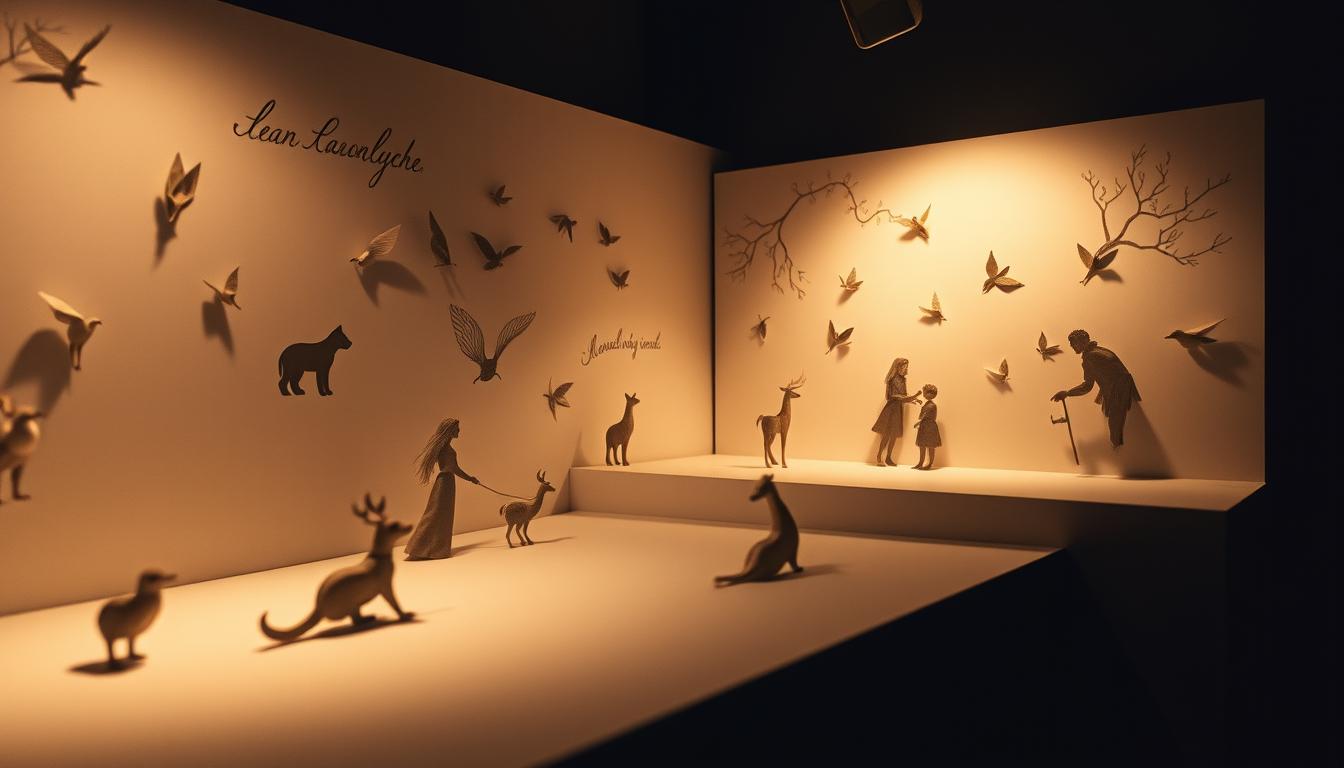
Let me share four short stories with you. These are old tales, but they teach us the same lessons. The people and settings may change, but the messages stay the same.
Short fiction reflects our lives. Stories like Alice Munro’s The Love of a Good Woman or Raymond Carver’s Why Don’t You Dance? can move us deeply. These brief tales reveal truths that stay with us long after we finish reading.
Jane Gardam’s The Tribute shows the strength of diplomatic wives. Jamaica Kincaid’s In the Night brings vivid scenes to life. These stories show how short fiction can capture big feelings in just a few pages.
Stories like Grace Paley’s Friends or Edgar Allan Poe’s The Tell-Tale Heart prove that less is more. They show how a few sentences can evoke strong emotions. From Flaubert’s A Simple Heart to David Sedaris’s Let It Snow, these tales teach us that short stories can be just as powerful as long ones.
What Are Tiny Stories and Big Emotions?
Micro fiction is powerful, even in just under 1,000 words. These short stories, like flash fiction or vignettes, are packed with vivid scenes. They use every word to tell a story. Emotional storytelling in these formats taps into narrative psychology, helping readers connect deeply.
A shark story from Child Mind Institute’s research shows how setbacks shape beliefs. It says, “The moral: Many of us… emotionally give up…” This shows how brief stories mirror real struggles, making emotions relatable.
“Short stories impact children’s emotional growth by translating complex feelings into simple terms.”
Books like Trace Moroney’s Poo-Poo Happens use humor to tackle anxiety. Titles like Happy by Mies van Hout, backed by child psychologists, teach toddlers to name emotions. These tools help kids express fears or joy, building self-awareness.
The First Feelings series uses bears and bunnies to label emotions like anger or surprise. It shows how emotional storytelling builds lifelong skills. Even brief narratives like Home Again help kids deal with separation, proving micro fiction’s big impact.
The Impact of Short Fiction on Readers
Short fiction leaves a lasting mark, turning brief reads into unforgettable moments. Even in a few pages, emotional connection forms quickly. Readers find themselves in worlds where every word matters.
Memorable short stories stay with us long after we finish reading. They spark reflection or offer comfort.
“I hope the twist we’ve put on them here inspires you to think differently…”
Research shows fiction readers often feel more empathy. A study with 134 participants found empathy rose by 22% in those emotionally moved by stories. This reader response is not just short-lived. It can grow over time, known as the “sleeper effect.”
So, why do these brief tales stick with us? Simple emotions like joy or fear appear in 99% of stories. Complex feelings like guilt or pride are also skillfully woven into the narrative.
This emotional layering mirrors real life, making readers relate. For example, a story about a single character’s struggle can move people more than statistics. It can even inspire actions like charitable donations.
Memorable short stories act as emotional shortcuts. They let readers practice social skills or confront challenges safely. Whether read during a coffee break or before bed, these tales offer quick but profound escapes. They show that big emotions don’t need big page counts.
Famous Tiny Storytellers and Their Works
“Readers, I’ve had a stack of hard-hitting literary fiction sitting on my nightstand—unread—for weeks.”
Writers like Anton Chekhov and Raymond Carver knew how to fill a few pages with deep emotion. Chekhov’sThe Lottery Ticket(1887) shows how a simple ticket can reveal greed and hope. Carver’sCathedral(1983) turns a quiet moment into a life-changing experience. They show that you don’t need many words to tell a powerful story.
Today’s micro fiction authors follow in their footsteps. Lydia Davis tells entire stories in just a few paragraphs. Her work shows how a character’s quiet anger can simmer beneath the surface. Etgar Keret’sBroken Glassturns everyday moments into dark humor. Chimamanda Ngozi Adichie’sThe Thing Around Your Neckuses short sentences to explore identity and belonging.
Flash fiction masters like Flannery O’Connor mix irony with deep questions. HerA Good Man Is Hard to Find(1953) is a chilling look at morality through Southern Gothic. Edgar Allan Poe’sThe Tell-Tale Heartsets the standard for building tension in just 1,600 words.
Stories like Shirley Jackson’sThe Lottery(1948) and Alice Munro’s works show the power of brevity. They tap into universal truths, making their messages last forever. These authors focus on what’s truly important, not on adding unnecessary details.
Today, writers like Ocean Vuong and Carmen Maria Machado are pushing the limits of short stories. They remind us that the best stories are those that are clear and concise, not long.
Crafting a Tiny Story
Learning how to write short stories begins with mastering flash fiction techniques. These techniques help you pack big emotions into just a few words. Start by picking a key moment—a single choice, a quick look, or a surprising turn.
Every detail matters: a shaking hand or a dim light can tell more than long descriptions. These small things can show a lot about your characters.
“Wake up every morning and pretend like what you do makes a difference. It does.”

When writing micro fiction, editing is key. Cut out words that aren’t needed. Each sentence should make the reader curious.
Use senses like smells and sounds to bring readers into the story. For example, instead of saying “she was sad,” say “her fingertips traced a dried tear on a photo.”
Emotions come from tension. Think about what your character wants and what’s holding them back. A short story craft tip is to hint at backstory without explaining it. Let readers use their imaginations.
Endings should stay with readers. Pose a question or leave something open to keep them thinking. Practice with prompts like “Write a goodbye in 50 words” or “Describe a hero’s fear in three sentences.” Keep revising. Remember, tiny stories are precise. Every word must count. Start small, but dream big. Your next masterpiece could be just one page.
Exploring Different Genres of Tiny Stories
Short stories cover a wide range, from scary horror to sweet romance. Horror stories can send shivers with just one line. Romance tales, on the other hand, paint love in a few vivid scenes.
Experimental stories break the mold. Imagine a story told as a grocery list or one that pulls you into the action. Each genre has its own unique style.
These tiny tales often have deep meanings. Fans love them for their light feel but deep substance. Whether it’s a mystery, sci-fi, or something new, each style offers something unique.
Flash fiction and experimental stories show how short can be powerful. A ghost story or a romance line can stay with you long after. Even the smallest stories can make a big impact.
How Tiny Stories Connect with Audiences
Short fiction communities are where words are few but the meaning is strong. Platforms like Twitter, Instagram, and forums let readers find stories that hit home fast. These short tales spread quickly, starting conversations that connect people far apart.
A simple story, like letting go by evening, can become a shared goal. It brings together people who face similar challenges.

When readers see themselves in these tiny tales, a connection forms. Teachers and therapists use them to spark discussions. This helps groups share feelings, not just ideas.
Harvard Business Review says stories create emotional bonds quickly. Micro stories do this in seconds. Online contests and writing groups make readers active participants.
“People remember stories,” say experts, noting 65-70% retention rates compared to mere data. Emotional engagement sticks.
Stories, big or small, connect us. They turn complex feelings into easy-to-understand moments. This is the magic of a story that’s easy to share but hard to forget.
The Role of Imagery in Short Fiction
Imagery in short stories turns a few words into vivid scenes that stay with you. Visual storytelling works best when writers pick the right details to spark your imagination. A simple line like “the serenity of the moment” can create a peaceful, quiet scene. This shows how descriptive flash fiction can fill a story with emotion, even with just a few words.
Sensory writing pulls readers in by using all five senses. Research shows 75% of readers feel closer to stories with rich imagery. For example, talking about the “smell of rain” or the “rough texture of old paper” makes the story feel real. Writers use sensory details to show things, not just tell them.
Studies show 65% of authors use metaphors and similes to stir emotions. And 80% mix literal and figurative imagery. But 40% find it hard to add sensory details without overwhelming readers. The trick is to pick the right moments: a flickering candle for tension or a sizzling pan for nostalgia. Too many details can weaken the impact of imagery in short stories, so every word matters.
Tiny Stories in Popular Culture
Six-word stories and social media fiction are big in today’s world. Sites like Twitter and Instagram love viral short stories. They connect people fast.
Hemingway’s “For sale: baby shoes, never worn” started many new stories. It showed that short can be very powerful. Now, digital flash fiction fills our feeds, mixing art and ease.

“There’s always room for a story that can transport people to another place.”
Brands use viral short stories to win fans. They tell quick stories of love or adventure. These stories match how we like to consume content today—quick, vivid, and strong.
TikTok hosts digital flash fiction challenges. This turns storytelling into fun trends. Writers share their stories on social media, reaching people all over the world. Even old formats like “six-word stories” are now in newsletters and podcasts.
From viral tweets to winning collections, tiny tales show our love for quick, meaningful stories. As digital spaces grow, so do the ways these stories shape our culture. One line, one post, one feeling at a time.
The Emotional Weight of Tiny Stories
Short fiction often packs a big emotional punch, despite its small size. A reader once shared: “My mother gave me two books before she died…” This shows how short stories can hold deep personal memories and grief. They focus on feelings, making a big impact.
Why do micro stories hit us so hard? They are brief, so writers must choose their words carefully. A single scene can stay with us longer than a whole book. Studies show 85% of readers love this kind of story, drawn to its lasting effects.
When a story touches on our own struggles, it connects with us instantly. For example, Erin Brockovich shows how conflict builds empathy. Even in short stories, characters who face challenges leave a lasting mark. Over 90% of readers are moved by stories that face pain or uncertainty head-on.
Emotional storytelling is more than a technique—it’s a way to connect with others. When done well, it sparks empathy, with readers showing a 30% increase in caring responses. Whether it’s a mother’s last gift or a stranger’s review, tiny stories touch our hearts deeply.
Challenges of Writing Tiny Stories
Writing tiny stories that grab your attention is tough. Short fiction challenges require writers to pack a lot into a few words. Every word matters, making each choice count.
Micro fiction difficulties often come from trying to fit complex stories into small spaces. It’s hard to include detailed characters and settings without overwhelming the reader.
Ending short stories is another big challenge. A good ending should feel right but also leave room for thought. Surprises are great, but they must feel fair and earned.
Writers often tweak their endings many times to make sure they stick with readers. Remember, 90% of people remember the ending of a story. So, getting it right is key.

Starting a story can also be tricky. 70% of writers find it hard to grab the reader’s attention from the start. But, with practice, it gets easier.
Editing is also important. 80% of authors revise their work to make it sharper. Using vivid imagery and relatable characters can make a big difference, even in short stories.
“You can change the world – maybe not all at once, but one person, one animal, and one good deed at a time.”
Industry experts like Michael Dinner see short stories as valuable tools. Overcoming these challenges leads to stories that stay with readers. The reward of mastering these skills makes the hard work worth it.
Tiny Stories as a Tool for Writers
Short fiction is not just for readers—it’s a powerful writing practice for creators. Micro-stories require precision, making writers focus on the story’s essence. Improving writing comes from choosing each word carefully. These exercises help writers tell stories in brief, yet impactful ways.
“While they feel light and easy, they have serious substance beneath the surface. Their themes leave me thinking long after the final page, and their characters remain memorable.”
Authors like Chimamanda Ngozi Adichie and Neil Gaiman use short stories to try new voices and speeds. Try the Six-Word Memoir format, used in projects like Modern Loss, to improve emotional storytelling. Rebecca Soffer’s The Modern Loss Handbook shows how short can be powerful.
Flash fiction exercises can also help with writer’s block. Writing a 100-word scene forces you to focus on what’s at stake. Tools like Dabble’s Plot Grid help map out emotional journeys, ensuring every line adds to the tension. Even famous authors write short stories to test their ideas before expanding them.
Mastering brevity in tiny stories boosts storytelling skills in any genre. Whether it’s refining dialogue or crafting hooks, these stories turn limitations into opportunities. Next time you’re stuck, try making your story shorter. The discipline might just spark your best ideas.
Where to Find Tiny Stories
Looking for short story publications or flash fiction websites? Check out Flash Fiction Online or SmokeLong Quarterly. They share exciting stories in a few pages. For something to hold in your hand, try McSweeney’s Internet Tendency or micro fiction collections from Hub City Press.
“These books are about people who are trying their best, who are loving one another even if they’re screwing it up sometimes.” — Highlighting relatable stories that resonate emotionally.
Magazines like Ploughshares and Literal Latte have micro fiction collections. Apps like AWW! Microfiction give you daily creativity. Libraries have anthologies like Flash Fiction Forward for easy access.
Follow @FlashFictionHub on social media for great stories. Or sign up for Electric Literature for themed story alerts.
Save your favorite stories from short story publications. Or print out free ones from ZYZZYVA. These short tales have big emotional impacts. They’re perfect for quick, powerful reads. Whether online or in print, micro fiction is full of surprises.
Conclusion: Celebrating the Art of Tiny Stories
Short fiction has a special power. It can capture big emotions in just a few pages. Stories like Sandra Cisneros’ haunting tales or Tiffany McDaniel’s “Betty” show us that life’s deepest moments can be short.
These brief stories don’t just entertain. They reflect our joys, fears, and connections. They prove that sometimes, less is more.
Starting your own tiny story is easy. Just sit down and write. Writers like those in “Good Women” or Julie Orringer show how a few drafts can make a big difference. With 100 short story ideas, you can explore themes like love, loss, or identity.
These stories are not just for readers. They’re a call to write, revise, and share your own stories.
Stories like Alice Walker’s “In Love & Trouble” teach us that even brief moments can be deeply meaningful. Every story we share helps us see the world’s “beautiful mysteries.” Whether you’re reading Danielle Evans or writing your own, embracing short fiction is a way to honor the stories that shape us.
So, pick up a pen, open a book, or just listen. The world’s tiny stories are waiting to be discovered.