
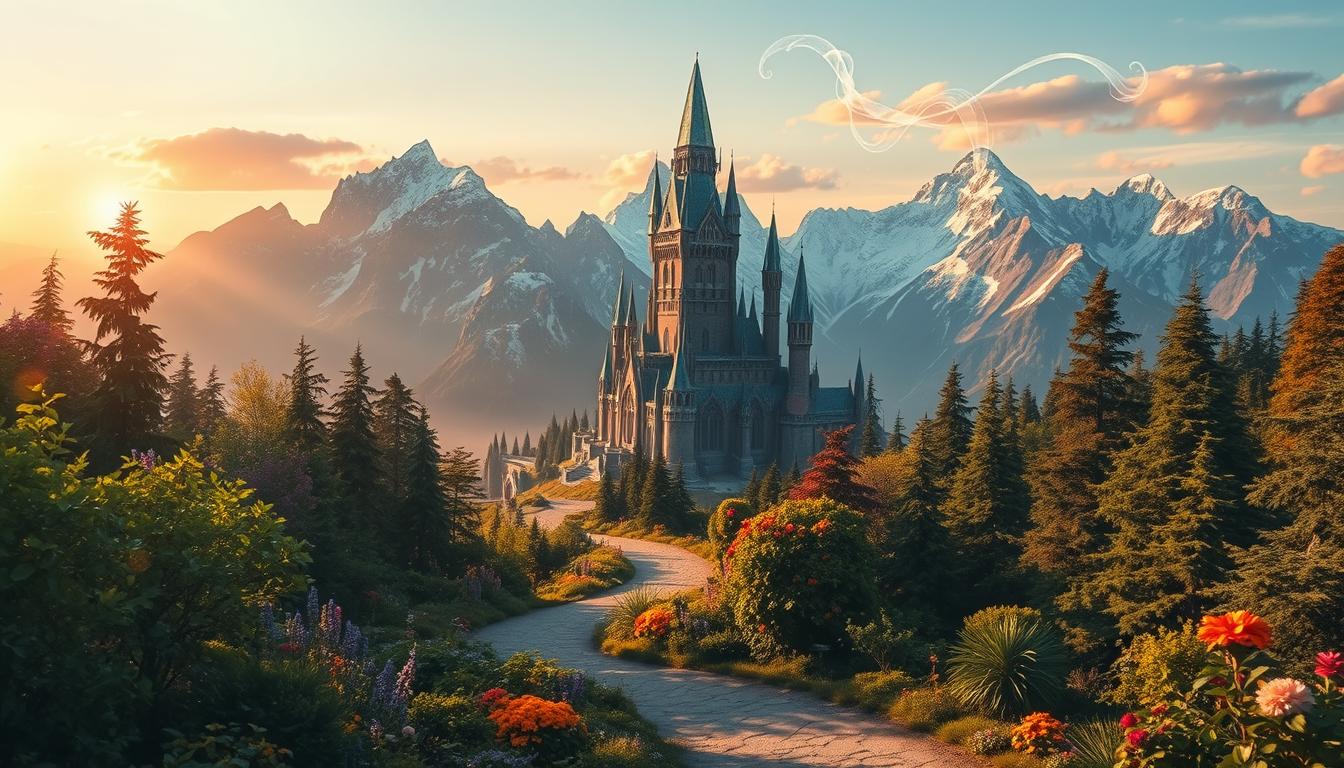
Fantasy short stories take readers to magical places where dragons fly and magic changes lives. These quick reads are perfect for those with little time, mixing adventure with creative twists. A writer once said, “Fantasy writing is a lot of fun. It lets you make your own rules.” This freedom creates stories that capture your interest in just a few pages.
For students and readers, brief fantasy tales open doors to worlds where heroes face challenges. Programs like CommonLit use these stories to start discussions on courage or justice. Their short length makes them great for sharing and remembering long after you finish reading.
These stories are filled with enchanted forests and mythical creatures, asking readers to wonder, “What if?” Whether read alone or aloud, they pack big ideas into short adventures. This shows that even brief tales can feel grand.
What Are Short Fantasy Adventures?
Short fantasy adventures are like mini-journeys into magical worlds. They offer big imagination in small packages. These fantasy flash fiction tales and short-form fantasy stories are short, ranging from under 1,000 words to 7,500 words. They’re great for quick reads.
Their strength is in compact storytelling. Each sentence builds a world, introduces a hero, and drives the plot. This is something full-length novels can’t do as well.
“In fantasy writing, authenticity is a key piece of the puzzle. Whether this involves developing a magic system or envisioning an entire world, part of your job will involve convincing the reader that this place feels real.”
From ancient myths to modern apps, fantasy narratives have changed with how we read. Early fairy tales like “Cinderella” started the trend for today’s fantasy short form. Now, you can find it in apps, blogs, and magazines.
Writers today create immersive settings and conflicts that grab readers right away. Even with limited pages, they can tell compelling stories.
These stories are all about focus. Imagine a dragon’s curse fixed in 500 words or a kingdom’s fate decided in one scene. That’s the magic of short fantasy—where every word matters, and every world feels real.
Why Readers Love Short Fantasy Adventures
Ursula Le Guin noted that fantasy is the ‘language of the night,’ capturing our innate desire for wonder.

Short fantasy adventures offer quick fantasy immersion. They bring magic to readers in just minutes. Studies show kids who read fantasy keep more vocabulary than those who read non-fiction. For adults, these fantasy escapism moments are mental breaks. They provide relief without needing a lot of time.
Bite-sized fantasy fits easily into our busy lives. A 15-minute break can take us to magical places. These magical short reads let us explore different worlds. We can dive into ancient myths or modern quests, all without feeling overwhelmed.
The fantasy reading benefits are more than just fun. Stories spark creativity and help us think abstractly. They also teach us important lessons that stay with us. Like Lewis Carroll’s Alice, these tales challenge our views and encourage new thinking. Whether during a commute or before bed, they feed our love for adventure and reflection.
Elements of a Captivating Fantasy Adventure
“The world is merely the backdrop. It is not the story. It will want to be the story. It will try. But you can’t let it.” – Suzanne Collins
Fantasy stories work best when every detail supports the plot. Start with characters that feel real. Give them clear goals, even in short stories. A farmer with hidden magic or a knight on a secret quest adds depth without long backstories.
Next, the plot must move quickly. A strong inciting incident, like a sudden spell or a missing artifact, gets characters moving.
Creating a magic system needs clear rules and stakes. It could be a rare gift or a dangerous tool. Define its limits early so readers understand. This makes the story more engaging.
For concise worldbuilding, focus on sensory details. Mention a glowing forest or a crumbling castle to hint at history without too much explanation.
Great fantasy adventures mix conflict and wonder. A dragon’s lair is more than a setting; it’s where heroes face their fears. Pair big stakes with personal choices. Even in short stories, a clear problem, struggle, and resolution are key.
Remember, the best stories let readers’ imaginations fill in the gaps. Leave room for wonder about what’s beyond the next mountain or behind the wizard’s door.
Notable Authors of Short Fantasy Adventures
Authors like Neil Gaiman and Ursula K. Le Guin are experts at telling big stories in small packages. Gaiman’s Fragile Things is a perfect example of dark whimsy. Modern writers like Kelly Link and Ted Chiang carry on this tradition, leaving readers with unforgettable tales.
Le Guin’s Earthsea series shows that short stories can be just as powerful as long novels. Their work shows how a few pages can hold a world of wonder.

Today’s fantasy writers are breaking new ground with their unique voices. Collections like Enchanted Waters and Tails, Scales, and Tiaras offer exciting stories and support ocean conservation and cancer patients. Authors like Nghi Vo reimagine classics, like The Great Gatsby, with fresh perspectives.
Newcomers like Shelley Parker-Chan and Tasha Suri introduce us to new worlds, like Indian-inspired realms in The Jasmine Throne. Their stories are full of magic and adventure.
Join the 2024 Fantasy/Sci-Fi Reading Challenge this July. Discover the works of these authors and explore a world of mythical creatures and futuristic landscapes. Their stories offer hope, humor, and haunting twists, making every page a journey into wonder.
The Role of Magic in Short Adventures
“I’ve always shied away from fantasy simply because I feel overwhelmed by the idea of creating a magic system.”
Good fantasy magic systems in short stories are clear and focused. They can be inspired by soft systems or hard ones. Magic should match the story’s rhythm. Magical world rules can be simple, like enchanted objects or specific powers.
A glowing amulet that works only in moonlight or a spell that costs memory are great examples. These fantasy magical elements add tension without making the story too complex.
“You make up the rules, and then you have to follow them,” warns one writer. This rule-following is a key strength. A concise magic worldbuilding approach helps authors show how magic affects characters.
In Forever Avalon, a character’s blood magic drains their energy. This rule shapes their choices. Such rules create tension and make surprises feel right.
Effective magical storytelling techniques mix magic with emotions. A hero’s fire power might show their battle to control anger. When magic connects to themes, like power’s cost, it enriches the story.
Readers feel the magic through sensory details. The sound of a spell or the feel of a cursed blade.
Tips for Crafting Your Own Short Fantasy Adventure
Starting a short fantasy story is easy. fantasy writing advice experts say start with a simple idea. It could be a spell, a quest, or a character’s dream. Focus on what your main character wants most. Then, build the world around that goal.
Keeping it simple keeps readers hooked. It doesn’t overwhelm them.
“Simplicity is essential in fantasy writing.”
Use short story fantasy techniques like starting in media res (in the middle of action) to grab readers right away. Add familiar details to make the magical feel real. For example, a goat near an ancient portal makes the story feel more real.

fantasy story development needs rules. Decide how magic works early on. Maybe spells cost memories or only work under a blood moon. This makes the story believable.
For brief fantasy writing tips, show, don’t tell. Let a character’s shaking hands show their fear instead of saying it.
Write every day with 31-minute sprints to improve your pace. Study great stories to see how they balance action and worldbuilding. And don’t forget to get feedback. Share your work with others to find mistakes or unclear parts. With these tips, your short fantasy can be just as captivating as a long one.
How to Create Enchanting Settings
Creating immersive fantasy worlds is all about balance. Use fantasy worldbuilding techniques to hint at depth without overwhelming readers. Start with familiar landmarks like fields, castles, or rivers. Then, slowly introduce the magical elements.
George R.R. Martin’s direwolf in A Game of Thrones is a great example. It introduces wonder subtly, letting readers grasp the unfamiliar through relatable details.
Magical settings creation thrives on contrast. Layer sensory details to bring your world to life. Describe the smell of enchanted forests or the clatter of steel in a market.
Patrick Rothfuss’s Name of the Wind uses taverns and academies as anchors. It lets magic unfold gradually. Prioritize fantasy setting development that ties culture to geography. A desert realm might value water rituals, while mountain kingdoms revere storms.
Selective focus is key. Tolkien’s Middle-earth maps show how geography shapes plots. Mountains block armies, and forests hide secrets. Even in short stories, sketch basic maps to guide character journeys.
Use fantasy environment design to reflect themes. A crumbling castle mirrors political decay, or neon-lit streets hint at hidden conflicts. Keep rules consistent—Brandon Sanderson’s magic “hard and soft” systems ensure believability.
Remember: 80% of readers crave authenticity through small details. A vendor’s dialect or a festival’s lore adds depth without exposition. Let settings evolve with your story, not overshadow it. When done right, immersive fantasy worlds feel alive, every cobblestone and spell a thread in your tale’s fabric.
The Power of Themes in Fantasy Adventures
“I believe the best fantasy holds up a circus mirror to our world and says, here, have a look at the true nature of greed, or jealousy, or ambition.” This quote captures how fantasy story themes transform everyday struggles into universal lessons through imaginative frameworks.

Thematic fantasy writing uses symbols to make complex ideas simple. A hero’s journey might show real courage, while a cursed kingdom reflects societal decay. These stories turn magic into metaphors, letting readers see familiar dilemmas in fresh ways.
When a character chooses sacrifice over power, it’s not just plot—it’s fantasy metaphorical storytelling at work.
Meaningful fantasy narratives often strip away modern noise to focus on core truths. A short tale about a child outsmarting a dragon isn’t just adventure; it’s about overcoming fear. Symbolic elements like enchanted forests or ancient prophecies can represent growth or cultural heritage.
Even in brief stories, themes like redemption or freedom resonate deeply. They avoid real-world complications, making their messages piercingly clear.
Whether exploring good vs. evil or the cost of power, fantasy uses its otherworldly settings to ask timeless questions. Readers remember stories where themes aren’t just background—they’re the heart of the adventure.
Exploring Different Subgenres
Fantasy subgenres offer endless ways to experience magic. With over 100 distinct styles, readers can find stories that blend horror, history, or humor. Dark fantasy short stories like Neil Gaiman’s Coraline mix eerie tones with portal fantasy, showing how subgenres overlap. Urban fantasy flash fiction, such as the Magic Bites series, merges modern settings with supernatural elements.
Fairy tale retellings reinvent classics with fresh twists. Cross-genre fantasy, like gaslamp or arcanepunk, combines magic with steampunk tech or Victorian aesthetics. Military fantasy pairs epic battles with strategic lore, while Afro-fantasy draws from African myths, growing in popularity by 10% yearly. Allegorical fantasy critiques real-world issues through symbolic tales, attracting 30% of readers seeking deeper themes.
“Fantasy’s strength lies in its flexibility—whether it’s sword and sorcery or mythic fiction, every subgenre invites new perspectives.”
From dystopian worlds in dying earth stories to comedic parodies in fantasy humor, there’s a style for every taste. Explore cross-genre fantasy to discover how magic meets mystery, romance, or sci-fi. With subgenres evolving constantly, the genre stays fresh for both writers and readers.
How Technology Influences Fantasy Writing
Technology changes fantasy writing, giving writers new tools. Tools like AI fantasy generation and digital fantasy creation software help create detailed worlds. Programs such as ChatGPT help with plot twists or unique magic systems.
ChatGPT is an incredible resource to dig into your story universe. In this article, I’ll show you some ways I use ChatGPT to develop worlds for my stories.
Now, apps help map kingdoms or suggest names for characters. Fantasy writing software keeps track of timelines and cultural details. This lets writers focus on their creativity.
AI tools like ChatGPT can spark ideas but can’t replace a writer’s vision. They help explore new possibilities, keeping stories fresh and original.
These tools let writers try out complex settings or diverse characters. Digital platforms make research easier, speeding up the process. But, the core of storytelling—emotions, conflict, and worldview—remains uniquely human.
Technology in fantasy writing is a partner, not a replacement, for the writer’s imagination.
Short Fantasy Stories in Popular Media
Fantasy stories now live in many fantasy media platforms. They turn short tales into deep experiences. From animated shows to interactive apps, these stories reach us through streaming and games. Love, Death & Robots shows how anthology series can share quick, powerful fantasy stories.
Interactive fantasy stories let fans dive in. Games like Undertale mix fantasy in video games with choices that shape the story. Mobile apps offer short quests, perfect for those who want quick stories without a big time commitment.
Fantasy anthology series like FIYAH Lit and Anathema bring together different voices. They mix humor, nostalgia, and social themes. Projects like Do Not Go Quietly show fans want stories that include everyone.
Short fantasy’s ability to adapt is clear in different formats. Anthologies like Robots vs Fairies blend genres. Podcasts like PodCastle let us listen on the go. Fantasy keeps growing, showing even short tales can spark our imagination.
The Future of Short Fantasy Adventures
Fantasy publishing trends are all about new ideas and variety. Books like The Starless Crown and Harrow the Ninth blend old magic with new tech. This shows how fantasy is evolving. Now, we see everything from TikTok stories to interactive apps, changing how we enjoy fantasy.
These stories often talk about the environment or global myths. They show that today’s fantasy is all about being creative and easy to get into.
The future of fantasy writing might include even more stories across different media. We could see augmented reality and AI tools that let readers help shape stories. Games like Legend of the Five Rings and the Topaz Championship RPG already offer unique experiences. They feature teen samurai and deep interactions with characters.
As tech advances, so will how we tell and enjoy fantasy stories. This mix of old and new magic will keep fantasy exciting and fresh.
Short fantasy adventures will always be a quick way to dive into magical worlds. Whether through apps, books, or games, fantasy sparks our imagination. The future looks bright for new ways to explore and create our own fantasy tales.