
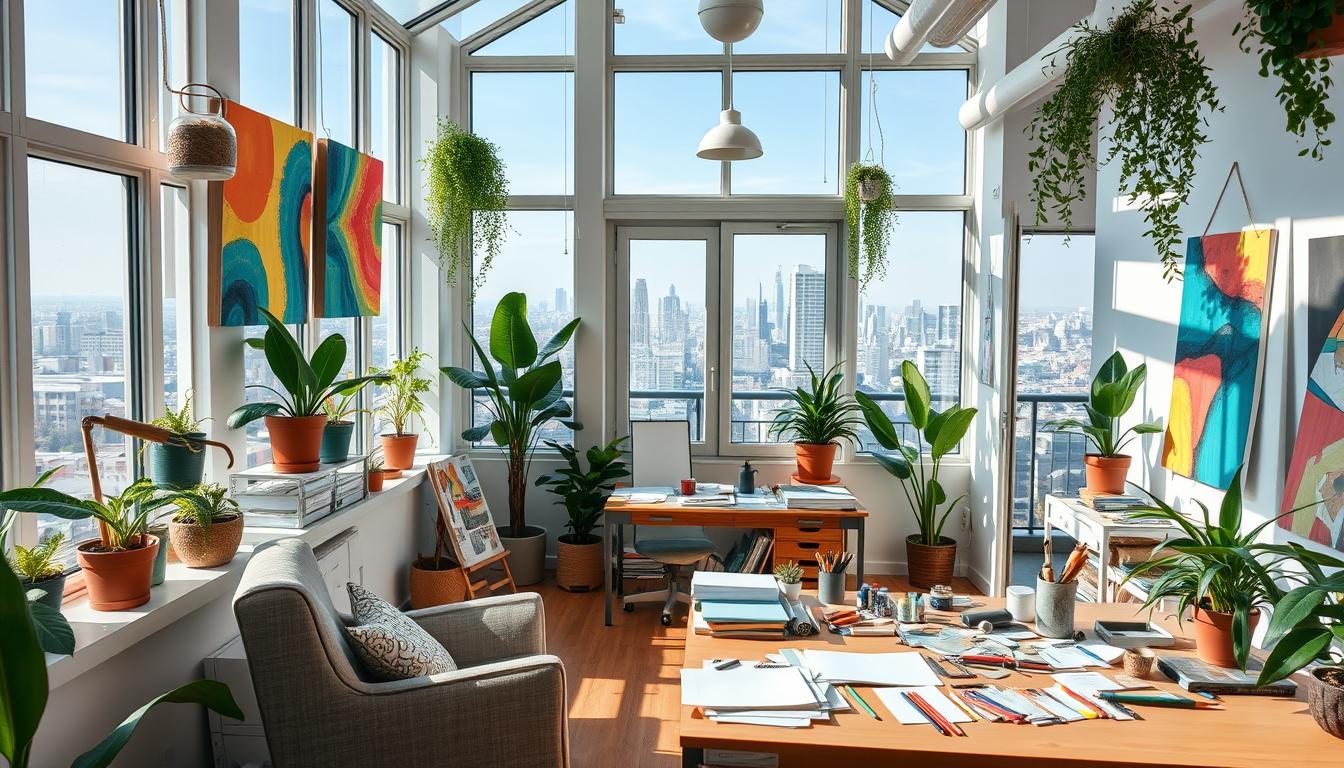
For over 45 years, research has shown a simple truth: our surroundings shape our creativity. Whether brainstorming in a messy office or strolling through a park, our environment affects idea formation. A study found kids in relaxed art parties made more creative collages than those in stressful settings.
This isn’t just about looks—it’s about how places like nature-filled rooms or team workspaces spark creativity.
Picture a workspace that boosts curiosity, not hinders it. Places that encourage self-motivation, like those with open tasks or nature access, can increase creativity. Even small changes, like rearranging a desk or trying a new café, can spark new thinking.
The right creative space isn’t just a trend—it’s proven to boost innovation. Ready to change your workspace? Let’s explore how every change can bring new ideas.
The Importance of Environment in Creative Thinking
“Creative people are idea adventurers who thrive on discovery. Resilience is another common quality of innovators. Innovators do not expect success to come easy and they keep pursuing their quest for a solution to a problem or opportunity. They are intellectual athletes who have the mental stamina to continue their quest.”
Science shows that our environment shapes our thoughts. Being in nature, like forests, boosts our creative thinking. It activates new neural pathways. The Attention Restoration Theory also shows that nature reduces mental fatigue, sparking creativity.
Studies using the Torrance test found that people in green spaces were 35% more creative than those in urban areas. Even small things like colors matter: blue encourages risk-taking, while red makes us cautious. Moderate background noise (70–80 dB) helps solve problems faster than silence or loud sounds.
How we design our workspaces greatly affects innovation. Natural light makes us 18% more productive and boosts employee engagement by 47%. Circular seating encourages teamwork, while angular layouts spark new ideas. Colors, sounds, and layouts are not just for looks; they unlock our creativity.
Personalized creative surroundings are also key. Flexible workspace design lets us adapt spaces to our tasks. Blue office walls or plants can inspire us, while cluttered desks can drain our focus. Companies that adopt these principles see 30% more innovative ideas when they embrace failure. Environments are not just passive; they actively help turn thoughts into breakthroughs.
How Different Spaces Inspire Unique Ideas
Spaces shape how we think. Inspiration spaces like bustling cafes or quiet libraries offer diverse surroundings that spark fresh perspectives. A coffee shop’s background noise might fuel brainstorming, while a museum’s art can shift problem-solving approaches. The right idea generation environment can turn obstacles into opportunities.
“Visit other locals and associate with creative people. Stay on the trail. Approach the idea from another angle for a different perspective.”
Research shows innovative settings matter. High ceilings boost abstract thinking, per a University of British Columbia study. Colors like blue and green improve problem-solving, while red focuses attention inward. These creative locations aren’t just backdrops—they actively engage the mind.
Data reveals 70% of founders link breakthroughs to changed scenery. Even small shifts, like moving from a desk to a park, can reset mental patterns. The “incubation effect” proves stepping away boosts creativity by 20-30%. Nature walks reduce stress, freeing the brain to explore ideas.
Experiment with spaces daily. Try a co-working hub for collaboration or a quiet gallery for focus. Let environments guide your process—your next big idea might be just a room change away.
The Psychological Effects of New Settings
Entering novel environments resets our minds. New places break our usual mental patterns. This leads to better cognitive flexibility and fresh views on problems.
Research shows psychological creativity grows when we break free from habits. For example, a study found people were 50% more creative after hiking outdoors. Their brains made new connections, unlike in static offices.
Our Default Mode Network, or the “idea generator,” works better in new places. This network is linked to daydreaming and insight. Even small changes, like rearranging a desk, can spark creativity.
Over 80% of people think more clearly after changing their environment. This shows that routine can stifle innovation. Embracing newness challenges our minds, encouraging curiosity and breakthroughs.
Nature plays a big role in this. Studies show spending 20 minutes in nature boosts creative thinking by 30%. Also, 70% of people in coworking spaces say diverse surroundings spark idea-sharing. So, let new environments disrupt your usual routine. A changed space is more than a backdrop; it’s a tool to change how you think.
The Impact of Collaborative Environments
Collaborative creativity grows when teams share ideas in creative workspaces. Companies like Google show that team innovation blooms in places where brainstorming is key. Open layouts and shared tables help ideas flow, creating a space for big breakthroughs.
“There is frequently a need for collaboration with experts along the way to implementation. A team approach should be considered.”

Today’s workplaces, like co-working hubs, are made for sparking ideas. Ben & Jerry’s boosts participation by 15% with anonymous suggestions. Virtual tools let remote teams brainstorm together instantly. Good spaces have both loud and quiet areas for everyone.
Feeling heard is key. When employees feel valued, innovation jumps by 30%. At Salesforce, roundtables and contests turn feedback into action. It’s all about mixing different views to create something new and amazing.
Leveraging Technology to Alter Your Environment
Technology changes how we use creative spaces. Apps like Calming Sounds or Noisli make any room feel like a rainforest or a café. This helps you focus better.
Virtual creative spaces, like those with VR headsets, let designers work in 3D. AR tools, like Microsoft HoloLens, add digital layers to real spaces. These tools help you create without leaving home.
Companies like IDEO use tech to bring teams together from anywhere. They create digital office layouts to boost teamwork. Lighting systems, like Philips Hue, also help by changing colors for different tasks.
Innovations don’t have to be major breakthroughs; they can be as simple as upgrading tools to enhance daily workflows.
Digital transformation is more than just tools. It’s about how we think. Remote workers use Figma for instant collaboration, turning homes into virtual studios.
A McKinsey report shows 78% of firms speeding up digital plans saw more innovation. Startups like Magic Leap mix AR with project tools, making team brainstorming easier. With technology and purpose, even small spaces can spark endless creativity.
The Influence of Nature on Creative Thinking
Nature sparks creativity when we connect with its natural rhythms. Outdoor inspiration is real, backed by studies. Natural environments refresh our minds and open new ideas.
Biophilic design brings nature indoors. It uses plants, natural light, and water to create calm spaces. Even a small plant can help ideas flow, reducing stress and improving focus.

“Natural settings provide the brain’s default mode network more space to wander, fostering unexpected connections.”
Nature helps us think creatively by reducing sensory overload. Cities are busy, but forests and beaches calm us. This calm lets our minds wander and find new ideas.
Small changes, like blue or green colors, can mimic nature’s calm. Blue is linked to creative thinking. Using blue in workspaces can inspire.
Designers at Reebok mix nature with workspaces. They use plants and walks in parks to spark ideas. Natural light boosts dopamine, making us more creative.
How International Experience Sparks Innovation
Traveling to new places is more than just seeing sights. It sparks international creativity. New cultures open our minds to see problems differently, revealing solutions we never thought of. Studies show 60% of travelers come back with fresh ideas, thanks to cultural innovation.
“New experiences often yield ideas when people observe different perspectives and adapt approaches to new opportunities.”
Getting involved in local crafts or working with artisans boosts cross-cultural thinking. A 2023 study found global practices improve cognitive flexibility by 30%. Even short trips can sharpen our minds, like the 70% of travelers who solve problems better after solo trips.
Virtual exchanges and cultural festivals at home offer similar benefits. Keeping a travel journal can increase idea generation by 50%. Companies like Airbnb and Patagonia use global teams for innovation. Travel or virtual connections spark curiosity, leading to breakthroughs.
Valuing diverse viewpoints is key to growth. Every new experience with different traditions or challenges prepares us to see the world anew.
Creating a Personalized Creative Space
A personalized workspace is more than looks—it unlocks your full capacity. First, think about how light, sound, and color impact your focus. Creative environment design works best when it matches your personal style.
Some people need quiet, while others work better with background noise. Research shows that natural light and certain colors can boost creativity. Green and blue hues, in particular, help spark new ideas.
“Natural light fosters superior creativity by encouraging a sense of freedom.” — Journal of Environmental Psychology

To start, try rearranging your furniture or adding plants. An optimal creative setting doesn’t need a big space. Use modular storage or moveable screens to change up your area as needed.
Even small changes, like rotating your desk, can help your brain. Keep the background noise low, around 50 decibels, to help your ideas flow better.
Try using sketchpads or fidget toys to get your hands moving. Studies show that physical activity can make your mind more flexible. Keep track of what works for you and make changes every week. Your creativity will thrive when your space reflects your needs.
Experimenting with Different Work Styles
Put Ideas to the Test: Innovators know the importance of experimentation. Testing is key to many advancements.
Companies like Modus Workspace show how work styles can evolve. They transformed The Typewriter into a coworking space, sparking creativity. Even small changes, like flexible schedules, can bring new ideas.
Starting with curiosity is key to trying new work styles. Some teams use the Pomodoro method, while others follow their energy. The right environment, like Modus’ Voysey House, boosts productivity.
Creativity routines vary, from early morning writing to late-night brainstorming. Innovation labs, like 30-day idea sprints, test new concepts. Even small changes, like switching desks, can refresh your mind.
Keep track of what works. Log your energy levels and deadlines. Celebrate successes and learn from failures. Companies like a wealth-management firm see better engagement and problem-solving.
Adapting work patterns is about learning, not perfection. Testing new approaches can increase efficiency by 30%. Embrace trial and feedback, and let curiosity lead your creativity. The right mix of structure and spontaneity turns any space into a lab for growth.
The Dangers of a Stagnant Environment
Working in the same place every day can lead to creative stagnation. More than 70% of creatives face creative blocks when their surroundings don’t change. This traps their minds in the same old thought patterns.
Staying in the same place also blocks innovation. Familiar settings can make us less curious. This makes it hard to think of new ideas.
“Stagnation can be extremely detrimental to your business. Achieving organizational and economic growth through innovation is key to staying afloat in today’s highly competitive world.”

When our surroundings feel the same, innovation obstacles grow. We start to only see things in one way, missing out on new ideas. Projects stall, and fresh ideas disappear.
Studies show that 65% of people break creative blocks by changing their location. Even a short walk or working from home can help.
Overcoming ruts begins with noticing the signs. Look for fewer brainstorming sessions or hitting the same dead ends. Small changes, like moving your desk or working remotely, can spark new ideas.
Nature breaks or working in new spaces can also help. These changes push us out of our comfort zones and encourage new thinking.
Change isn’t just a good idea; it’s necessary for survival. A stale environment is not just a setback; it’s a danger to your future growth. Shake things up by changing where and how you work. Your next big idea might be just around the corner.
Conclusion: Embracing Change for Creative Growth
Creative growth happens when we change our surroundings. By mixing old and new, we can keep innovating. Small changes, like rearranging your desk or going for a walk, can open up new ideas.
Companies like Google and Pixar know this. They mix structure with freedom to spark new ideas. Teams that have some freedom come up with twice as many ideas as those that don’t.
Starting to make these changes begins with knowing yourself. Think about how lighting or where you work can help you focus. Try new things like rotating your workspace or spending time outside. Creativity grows when we value trying new things over doing the same thing every day.
Businesses that adapt to change do better in the market. A study by Adobe shows that creative teams make more money and are more resilient. Begin with small steps, like trying a new coffee shop or changing your desk. These small actions can lead to big growth over time. The journey to innovation is about making the right small changes.