
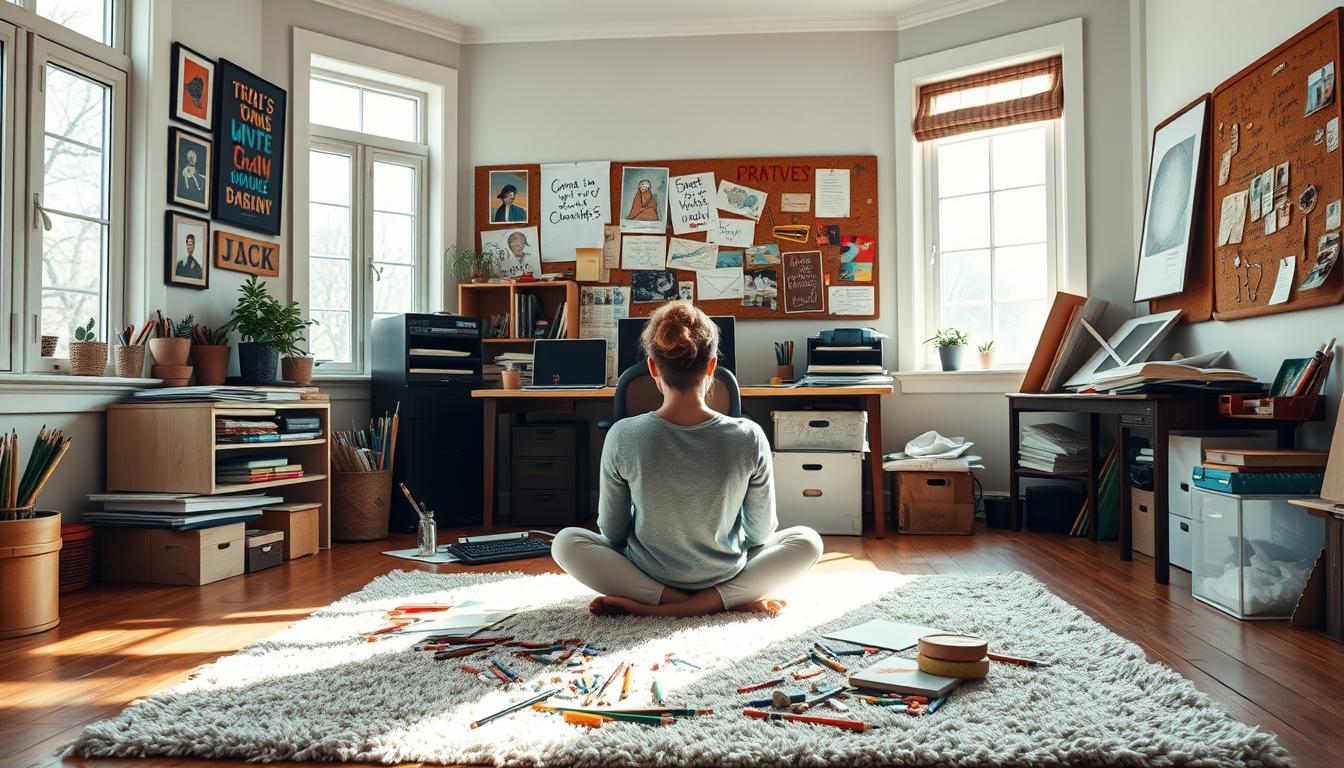
Feeling stuck and struggling to come up with new ideas? Creativity can sometimes seem hard to find. But, daily habits can help turn uncertainty into inspiration. Whether you’re working on a project or looking for a new view, regular routines create the space for your imagination to grow.
Try creative routines like morning walks or listening to music in the afternoon. Even small changes, like working at a café instead of your desk, can spark curiosity. These habits aren’t just about managing time. They’re ways to unlock your creative thinking and bring big ideas to life.
This guide shows how simple actions, like taking mindful pauses or talking with others, can turn everyday into a chance for innovation. Learn how to make creativity a part of your daily life, not just a dream.
Understanding the Importance of Creative Routines
Many think creativity comes from sudden ideas, but science proves it’s about routine. Habit formation clears mental space by making daily tasks automatic. This cuts down on mental exhaustion.
A study by Teresa Amabile found that routines help creativity grow. They improve ideas over time. Artists like Twyla Tharp and Hemingway followed strict routines. They turned discipline into a creative foundation.
Neuroscience shows that routines create neural pathways. This makes innovative thinking simpler. Walking, like Beethoven’s strolls, helps solve problems.
Stanford research found that walking boosts creativity by 60%. Sleep scientist Matthew Walker says sleep resets the brain daily. Even short breaks from screens can recharge your imagination.
“Sleep is the single most effective action to reset brain and body health.” — Matthew Walker
Artists like Bergman and Picasso valued daily routines. They did short writing sessions, walks, or journaling. These habits don’t block creativity; they spark it. By adding small practices to your day, you can create a space where imagination thrives.
Morning Practices to Ignite Imagination
Starting your day right is key to creativity. A simple morning routine can change how you face challenges. Begin with creative journaling—write freely for 5–10 minutes without judgment. This helps catch ideas before distractions come.

Meditation does more than relax you. Even 5 minutes of mindful breathing can sharpen focus. Meditation quiets self-doubt, boosting imagination. Try the 5-4-3-2-1 grounding technique to stay present and open to new thoughts.
Don’t skip movement! Exercise for creativity doesn’t need to be intense. A 10-minute walk or stretching routine boosts brain blood flow. Physical activity releases endorphins, improving mood and problem-solving skills. Dance to a favorite song or try yoga poses—any movement helps.
Pair these habits with curiosity. Try a new café for your journaling or listen to an unfamiliar podcast. Small changes in routine spark fresh views. The goal isn’t perfection—it’s progress. Every step forward primes your mind to embrace creativity all day long.
“Creativity is intelligence having fun.” – Albert Einstein
Cultivating Curiosity Through Exploration
Curiosity sparks creativity, a concept studied for over a century. Psychologist Daniel Berlyne found four types of curiosity, including epistemic curiosity, which drives us to learn more. Today, research shows curiosity helps us find creative connections between ideas.
Try something new, like a pottery class or gardening, to ignite creative exploration. Even a short pottery session can change how you see photography or writing.
Museums and galleries offer free artistic inspiration. Spend an hour looking at sculptures or paintings, then sketch your ideas. Francesca Gino’s studies show curious people consider more perspectives, reducing bias.
Workshops with others deepen learning—try a community art class or online course. Collaboration fuels creativity through shared insights.
“Exploration without a plan often leads to the most meaningful discoveries.”
Even small steps count: walk a new route to work, or cook a recipe from a different culture. These moments build lifelong learning habits. Let curiosity guide you—ask “What if?” when stuck.
A 2020 study noted curiosity varies by context, so embrace curiosity’s ups and downs. The goal isn’t mastery but staying open to wonder.
Every new experience expands your creative toolkit. Let curiosity turn daily life into a source of endless inspiration.
Leveraging Technology for Creative Output
Technology has a big impact on creativity. It includes creativity apps and tools for working together online. But, it’s important to use them wisely. Today, over 78% of artists use digital tools, but they must balance their use with focus.

Digital brainstorming tools like Miro or Figma help turn ideas into plans. They make it easy for teams to work together. Online places like Behance or Dribbble are great for sharing work and getting feedback. More than 90% of artists say these sites help them grow.
“The right tools don’t just assist—they expand what’s possible.”
But, too many distractions can hurt focus. Digital minimalism is key: turn off unwanted alerts and set times when you won’t use devices. Tools like Freedom or Cold Turkey block distractions. Use apps like Notion to keep projects organized, so tech helps, not hinders.
Apps like Procreate or Canva make creating art easy. AR/VR lets artists explore 3D spaces. But, the secret is finding the right balance. Use tech to enhance ideas, not take over the creative process.
Balancing Structure and Flexibility
Rigid daily plans can stifle creativity. To thrive, embrace creative scheduling that combines structure with room to adapt. Flexibility in creativity isn’t about chaos—it’s designing frameworks where routines evolve with your needs.
Adaptable routines, like micro-habits, let you adjust. Personalized habits, such as brief daily writing or sketching, keep creativity alive. Studies show structured routines boost productivity by 40%, but over 35% feel more satisfied when schedules bend to their energy levels.
“Individuals in flow states report up to 500% higher productivity.” — Research on Flow States
Structured routines reduce decision fatigue by 70%, letting you enter flow—a concept psychologist Mihaly Csikszentmihalyi first studied. The Pomodoro technique (25-minute focused work bursts) exemplifies this balance. Pairing seasonal living—like autumn’s reflective practices—with flexibility can boost well-being by 20%, adapting habits to natural rhythms.
Balance isn’t about perfection. Let routines guide but not confine. Flexibility in creativity means tweaking plans weekly, ensuring habits stay energizing. Whether through 2-minute creative bursts or seasonal shifts, adaptability keeps inspiration alive.
Incorporating Play into Daily Life
Playful creativity isn’t just for kids. Adults who embrace adult play unlock their imagination. Video games, like narrative-driven titles, let players explore worlds where choices matter. This turns screen time into a chance to be creative and solve problems.

Cooking can be a creative adventure. Trying new spices or making up recipes makes meals a canvas. Even small changes, like rearranging ingredients, can spark new ideas.
“Play and depression are opposites,” researchers say. Play releases dopamine, which clears the mind. Games like *Codenames* improve strategy, and word games sharpen storytelling skills, all in a relaxed way.
Building playful habits takes 3–6 weeks, as Charles Duhigg found. Begin with a 15-minute daily “play break” for puzzles or writing. Apps like Habitica make chores fun, blending duty with enjoyment.
Adult play is not just for fun—it’s a tool. Games, cooking, or friendly competitions help us try, fail, and grow. By letting go of perfection, we unlock our creativity. Play is not a distraction but a way to boost productivity.
Effective Use of Downtime
Did you know boredom isn’t the enemy of creativity? Science shows two-thirds of adults check phones constantly, even without notifications. But, strategic breaks can turn unstructured time into creative gold. Taking a 10-minute walk or gazing out the window isn’t laziness; it’s mental recovery in action.
“Idleness is not wasteful—it’s as vital to the brain as vitamin D is to the body.”
Daydreaming benefits are backed by research. A study found people who endured boring tasks generated 41% more creative ideas than those in stimulating environments. Let your mind wander during chores like laundry—it’s a gateway to “aha!” moments. Rest for creativity isn’t just about sleep; it’s about carving space to recharge. Experts recommend 10-minute pauses hourly to boost productivity by 34%.
Turn downtime into a tool: silence phone notifications during breaks, and schedule 15 minutes daily for unstructured thinking. Even a shower or commute can become a brainstorming zone. Science says 70% of people’s best ideas strike during these moments. Embrace boredom; it’s your brain’s secret lab.
Reflecting on Past Creative Experiences
Looking back can open up new creative paths. Try making art like a child—craft a birthday card with glitter and pasta shapes. This playful creative reflection shows how pure imagination can spark new ideas. Even Salvador Dali used near-sleep states to capture breakthroughs, proving that creative analysis thrives in moments of relaxed focus.
Edison’s “thinking chair” and Dali’s key-dropping methods show how structured creative analysis fuels innovation. Review old projects to spot patterns—what worked, what didn’t. Use this feedback utilization to adjust future strategies without self-criticism. Every setback holds clues for improvement.
Solicit honest feedback but filter it thoughtfully. Not all opinions matter—focus on insights that align with your goals. Like Haruki Murakami’s disciplined routine, balancing reflection with action prevents stagnation. When stuck, overcoming creative blocks starts by revisiting what once inspired you.
Keep a journal to track daily progress and monthly milestones. Tools like Scrivener help log challenges and solutions, creating a roadmap for growth. Even short daily reviews—like noting three discoveries—build habits that turn setbacks into stepping stones.
Reflect not to judge past work, but to fuel future ideas. Small, intentional reviews transform creative struggles into opportunities. The mind’s quiet moments often hold the keys to tomorrow’s breakthroughs.
Trying New Approaches to Problem-Solving
Breaking free from routine thinking boosts creativity. To enhance creative problem solving, try new ways. Small changes, like using fewer tools or less time, can open new paths. It’s about curiosity, not perfection.
Collaboration leads to new ideas. Work with people from different fields. A designer and a biologist might solve a marketing problem together. This shows how diverse teams can innovate.
See mistakes as chances to learn. When an idea doesn’t work, use it to grow. As Einstein said, “A person who never made a mistake never tried anything new.”
Try something new today. Solve a routine task in an unusual way. Note the unexpected results. Share them with someone from another field. Celebrate the journey, not just the end result. Creativity grows when we change our habits.
Maintaining a Creative Environment
Nature and creativity are closely linked. A study found that a 25-minute walk in the park can improve problem-solving skills. To bring that spark indoors, design a space that inspires ideas. Start by organizing your workspace—keep tools within reach and surfaces clean to lower stress.

Small changes can make a big difference. Add plants, sunlight, or calming blues to your walls. Blue colors, known to boost creativity, can turn any room into a creative space. Hang art or photos of landscapes to bring in nature’s calm.
“Stimulating environments enhance creative thought processes.”
Even small spaces can be creative hubs. Use shelves for supplies and change your decor to spark new ideas. Tools like noise-canceling headphones or apps for focus can help balance technology and calm. Don’t forget the importance of good lighting—it improves mood and clarity.
Keep your space fresh by rearranging furniture or adding inspiring quotes. Display unfinished projects to remind you of your goals. The goal is to make your creative workspace fit your needs, whether you’re painting, writing, or brainstorming.
The Role of Community in Creativity
Creative community is more than just nice to have; it’s vital. Over 75% of creatives find inspiration through social connections. This shows that shared spaces are key to innovation. Platforms like Instagram groups or local meetups help solopreneurs avoid feeling isolated.
Isolation is a big problem, with 65% of creatives facing it even online during lockdowns. Building connections starts with small steps. Joining one forum or attending a workshop can open doors to lasting support.
Creative networking opens up new opportunities. Feedback from peers boosts motivation, as seen in Dumfries’ Creative Placemaking projects. Collaborative creativity thrives in these spaces, where locals have revived areas like the Midsteeple Quarter.
These efforts show how communities can amplify ideas. Even simple steps like sharing drafts in a Facebook group or attending a meetup can spark new ideas. Research shows groups with strong identities stay motivated longer, like the 2006 study noted.
Collaborative creativity grows when everyone’s voice is heard, as seen in Scotland’s community-led initiatives. Start by making one connection a week, whether online or in a local art collective. Small interactions can combat loneliness and boost output. Remember, 90% of creatives say community support boosts satisfaction, proving growth happens together, not alone.